
 AntoineAsphalt.ca
Retaining Wall & Fence Resources
Clear, locally relevant guides about wall and fence costs, permits, bylaws, materials, drainage and property lines.
Retaining wall guides
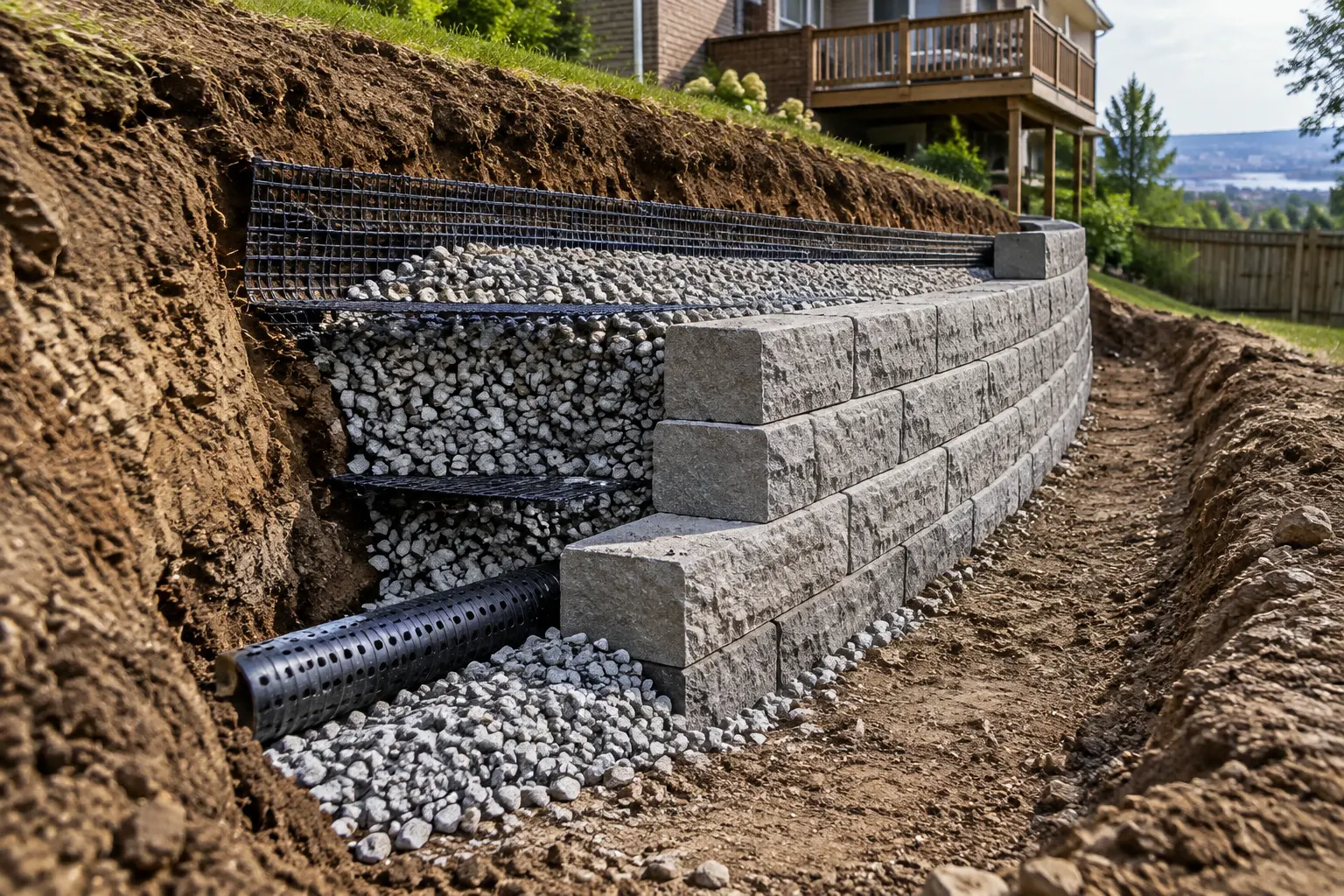
How Much Does a Retaining Wall Cost in Hamilton? (2026 Guide)
Retaining-wall cost in Hamilton depends on wall height and length, material, excavation access, drainage, reinforcement, demolition and permit or engineering needs. A site visit is required for a defensible price because two walls with the same visible size can require very different foundations.
Read guide →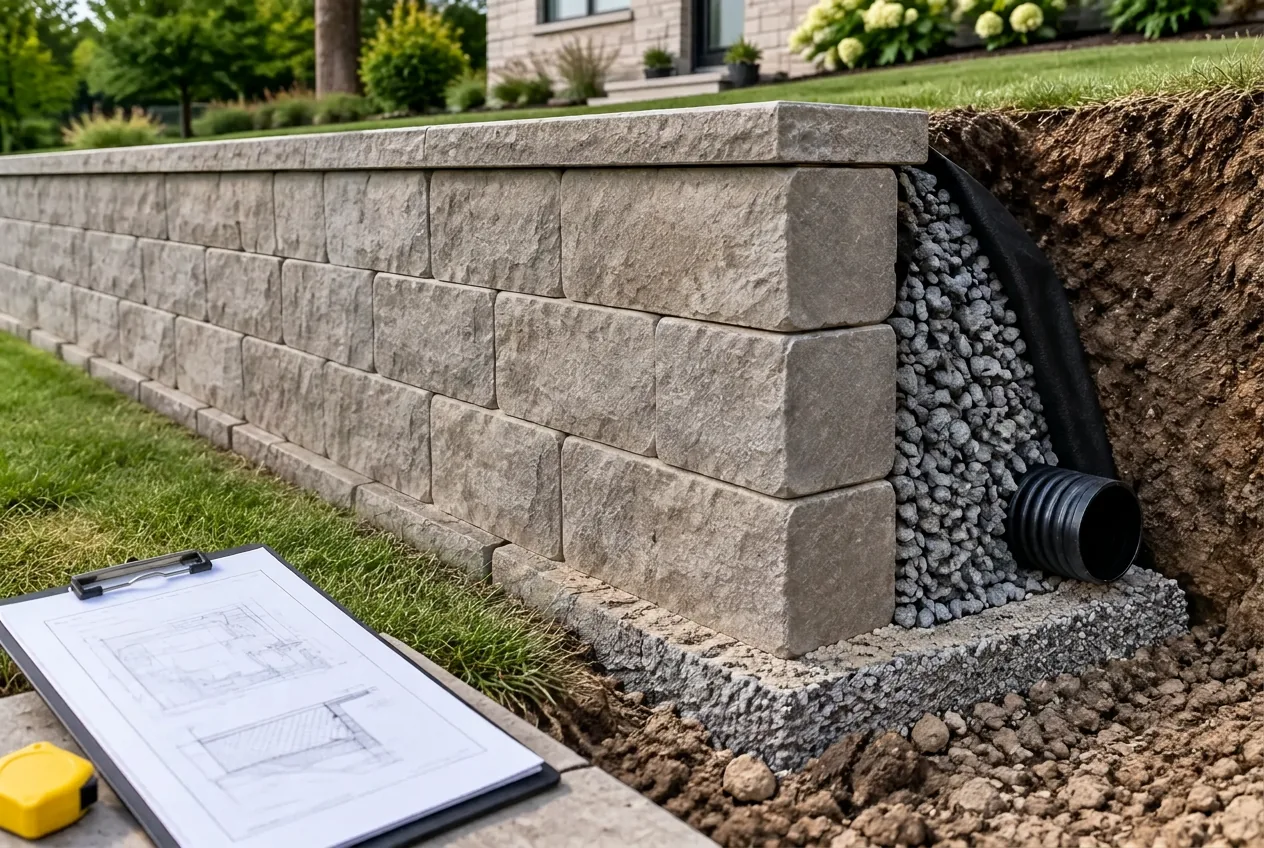
Retaining Wall Permits in Hamilton, Burlington & Oakville
A retaining wall is a designated structure under Ontario rules when it exceeds 1 metre in exposed height and is beside public property, building access or property open to the public. Other building, grading, site-alteration and conservation requirements may apply, so always confirm with your municipality before construction.
Read guide →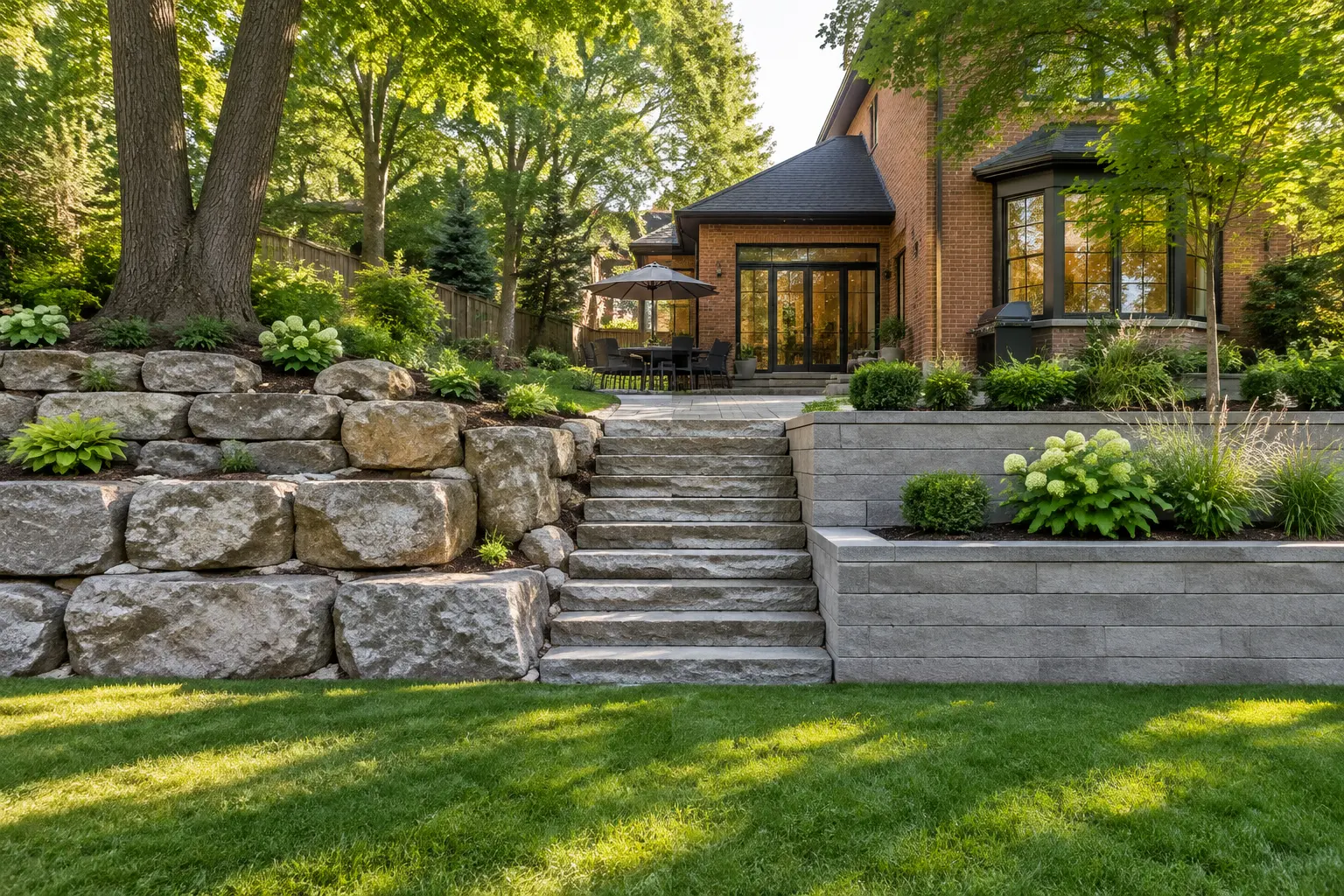
Armour Stone vs Block Retaining Walls
Choose armour stone for a broad, natural landscape where equipment access and wall footprint are available. Choose segmental block for cleaner geometry, tighter footprints, curves and engineered reinforcement options; neither is universally better.
Read guide →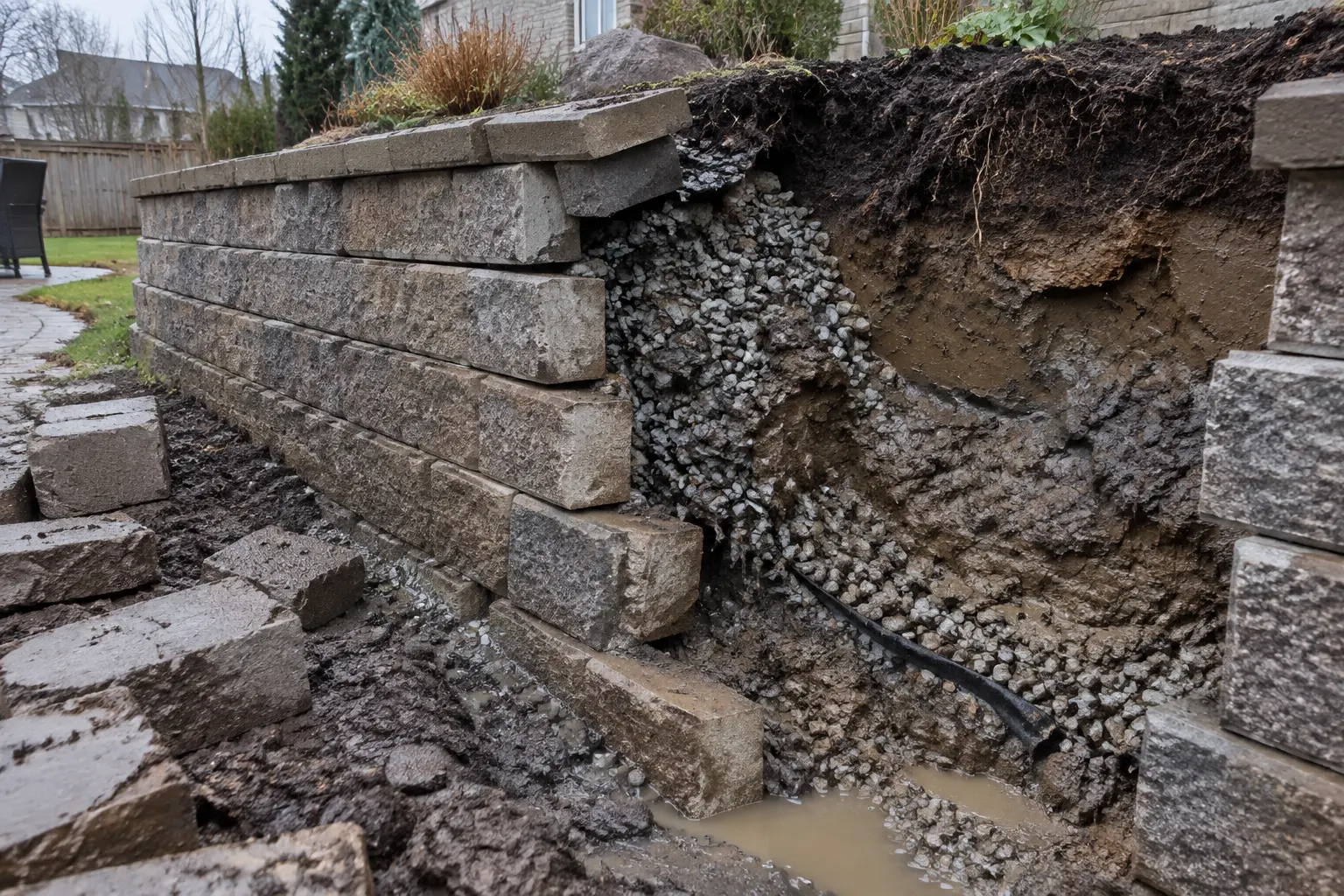
Why Retaining Walls Fail: Warning Signs & Causes
Retaining walls usually fail because water pressure, settlement, frost, missing reinforcement or loads behind the wall exceed what the system can resist. Leaning, bulging, widening joints and soil washout are warnings that need assessment—not cosmetic patching.
Read guide →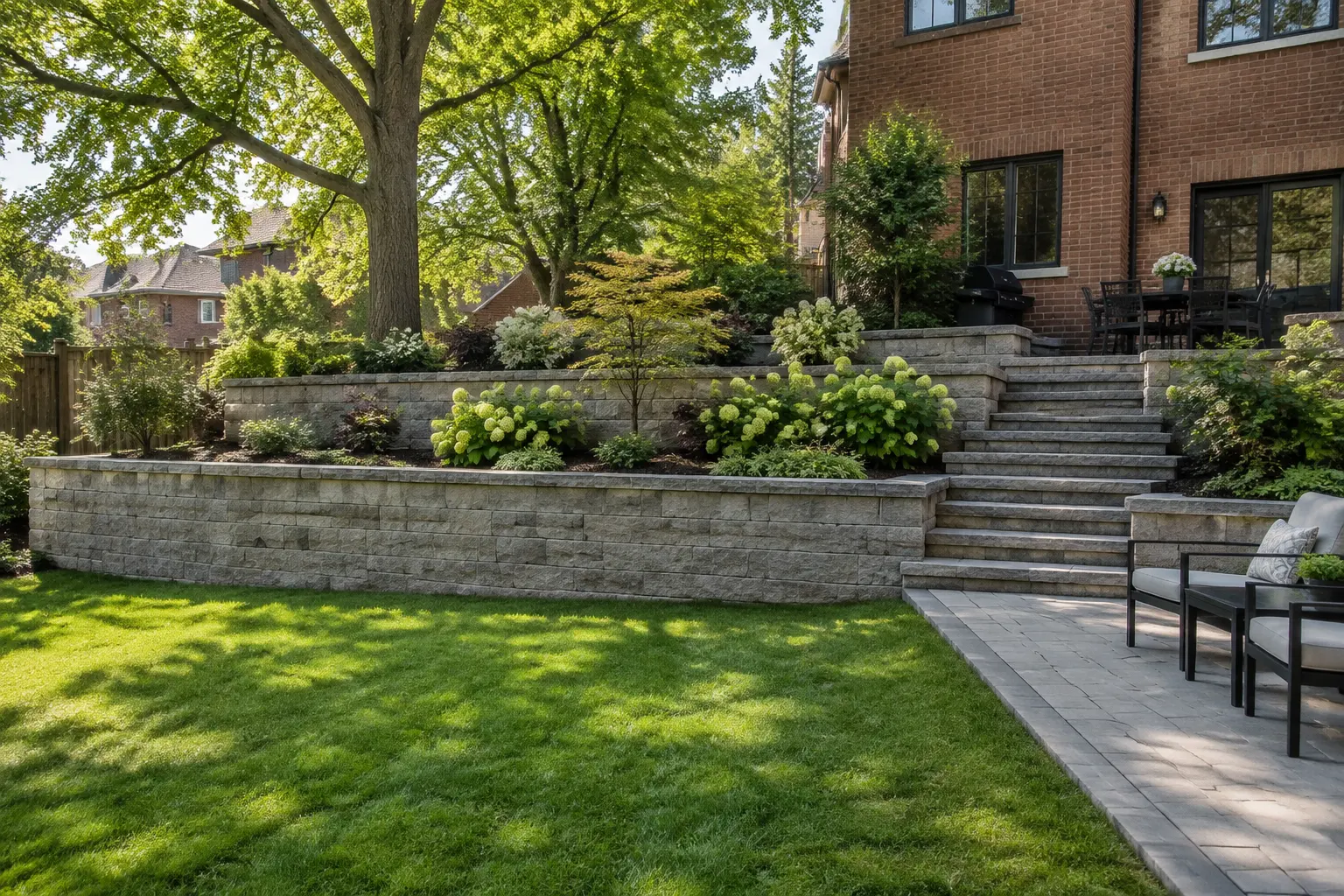
Best Retaining Wall for a Sloped Backyard
The best retaining wall for a sloped backyard depends on what the new level must do. Reinforced block often suits compact usable space, armour stone suits broad natural grades, and properly spaced terraces can create gardens, stairs and multiple outdoor levels.
Read guide →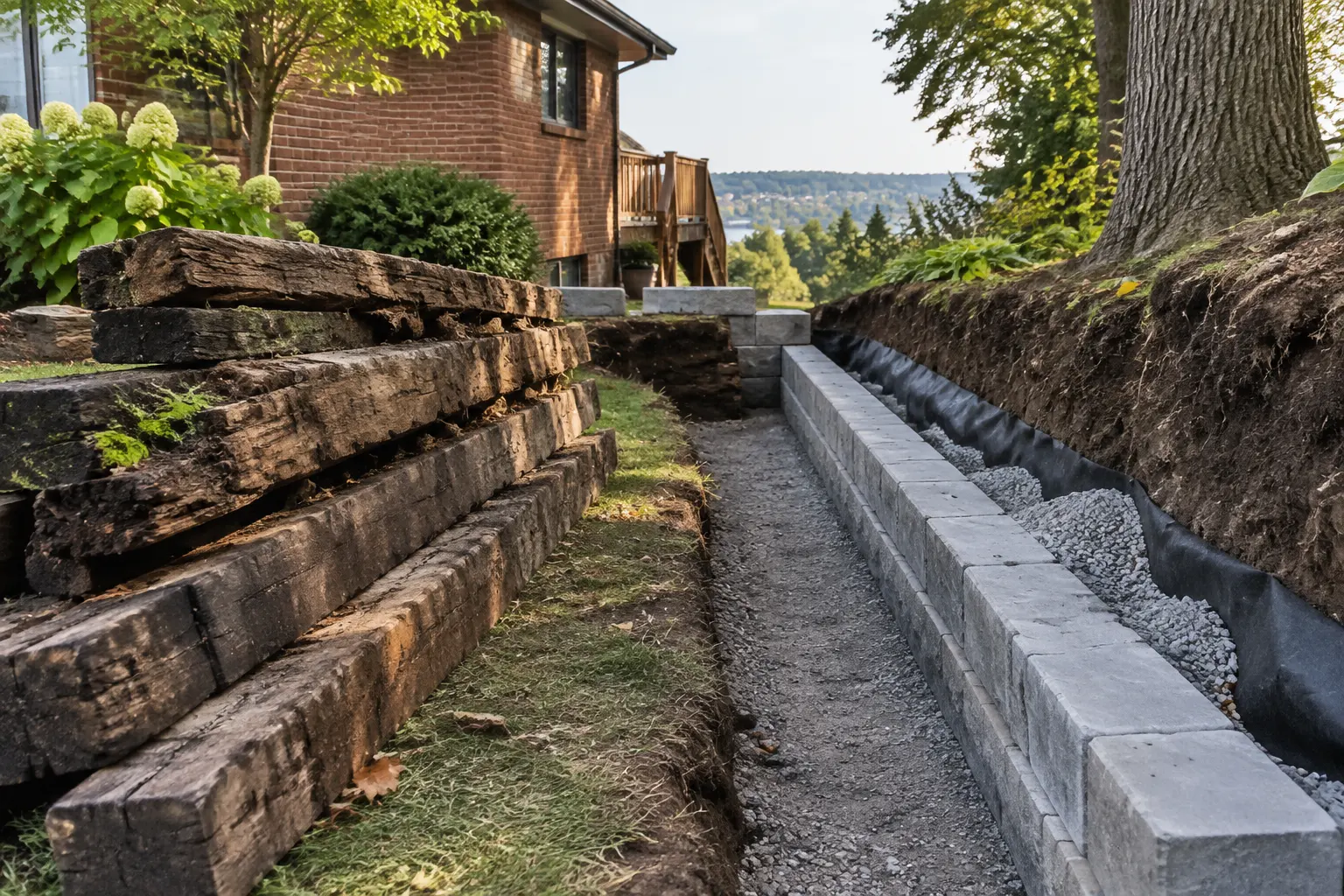
Replacing Timber & Railway-Tie Retaining Walls
Old timber and railway-tie retaining walls fail as wood decays, fasteners loosen, drainage clogs and soil pressure pushes the face outward. Replacement should remove unsuitable material, rebuild the foundation and drainage, and use a wall system matched to the site.
Read guide →Fence guides
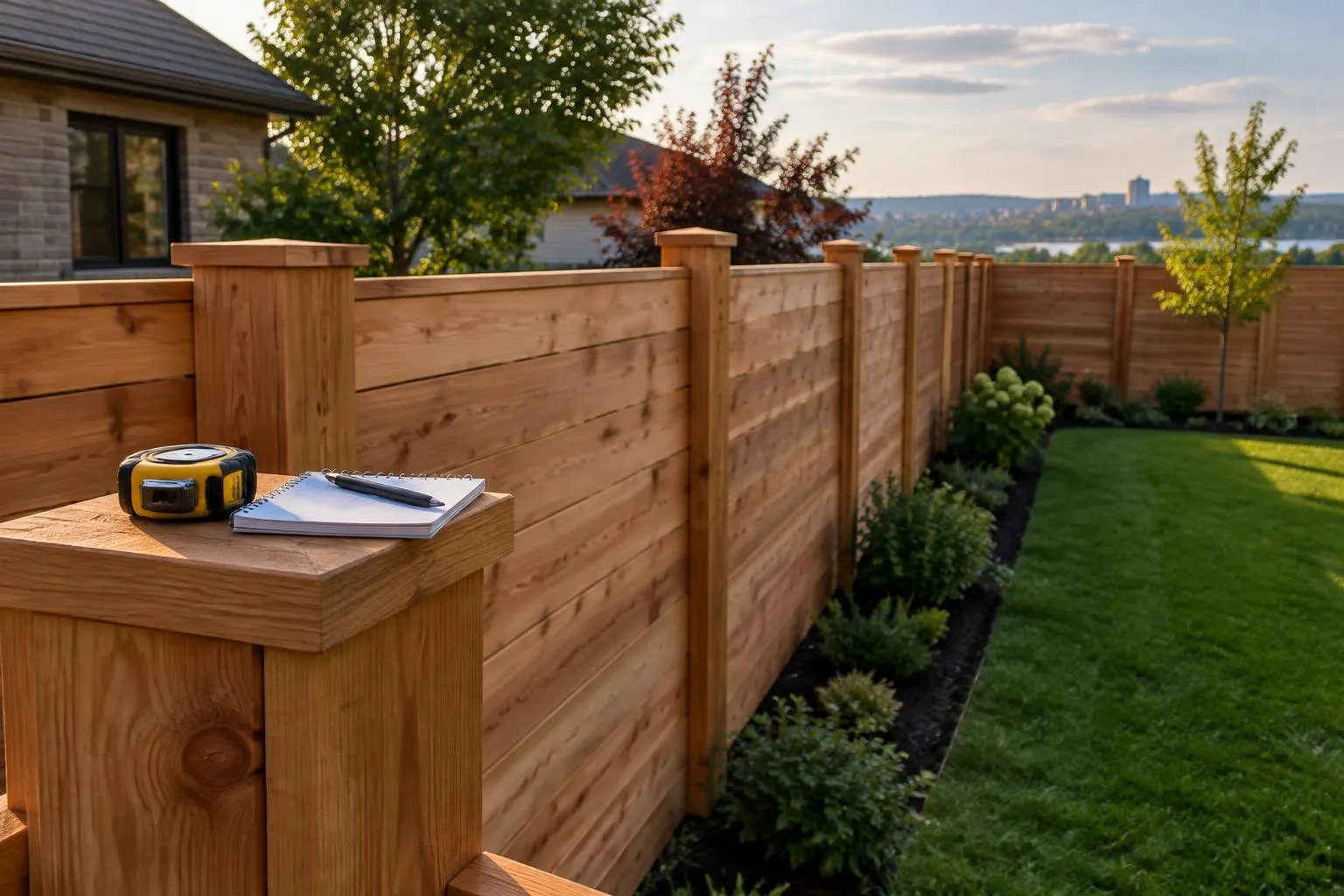
How Much Does a Fence Cost in Hamilton? (2026 Guide)
Typical Ontario installed ranges (2026) run from about $15–$40 per linear foot for chain link up to $55–$95 for composite, with pressure-treated wood at $30–$55 and cedar at $45–$75. A 100 ft pressure-treated privacy fence therefore lands around $3,000–$5,500 before gates and removal. Your exact price comes from an on-site quote.
Read guide →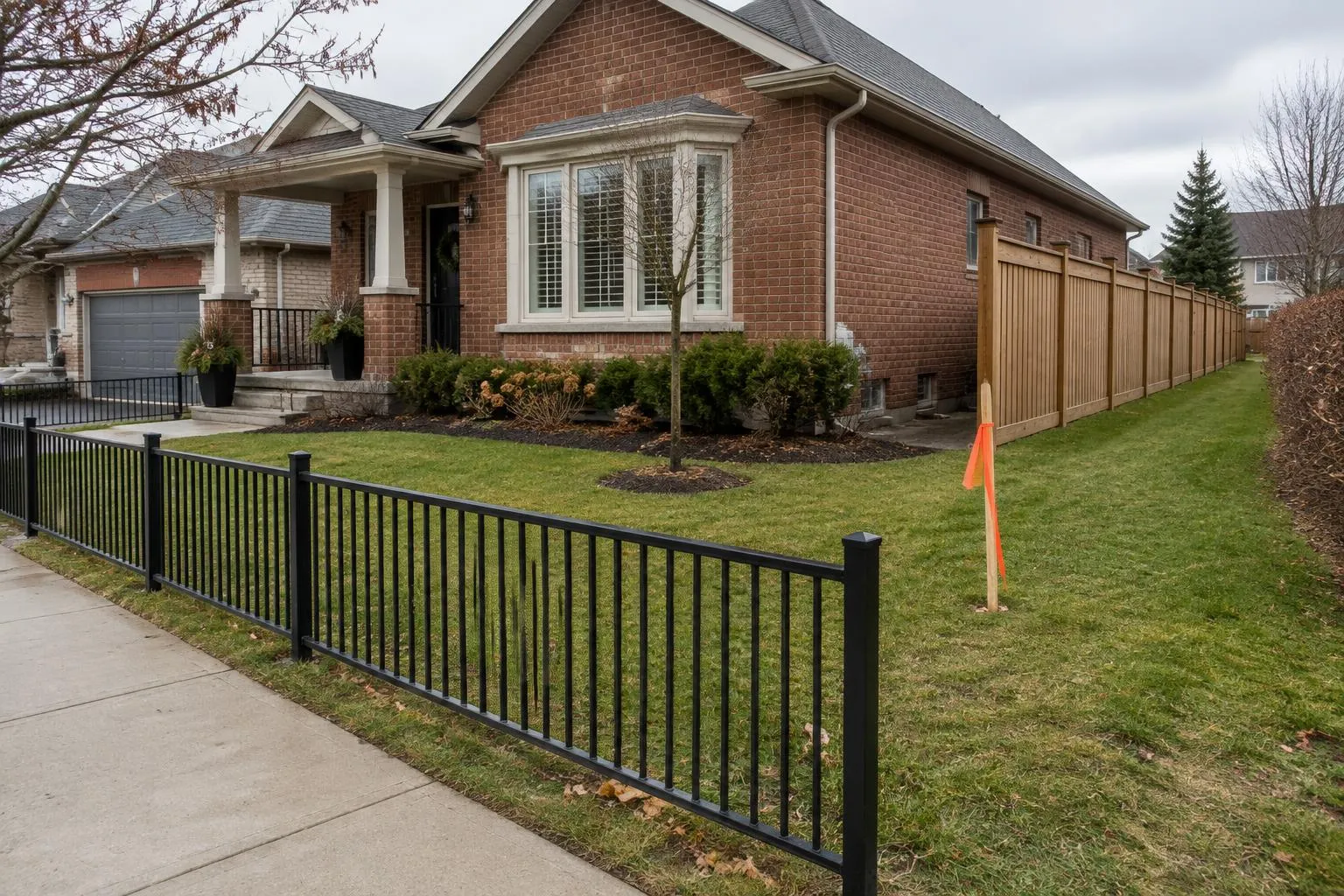
Fence Bylaws in Hamilton, Burlington & Oakville (2026)
Most residential fences in Hamilton, Burlington and Oakville are limited to about 2.0 m in rear and side yards, with much lower limits in front yards and visibility areas. Hamilton allows 0.9 m within 3.0 m of the front lot line; Oakville allows 1.5 m in the front yard with anything above 1.0 m being open lattice. Confirm current rules with your municipality before building.
Read guide →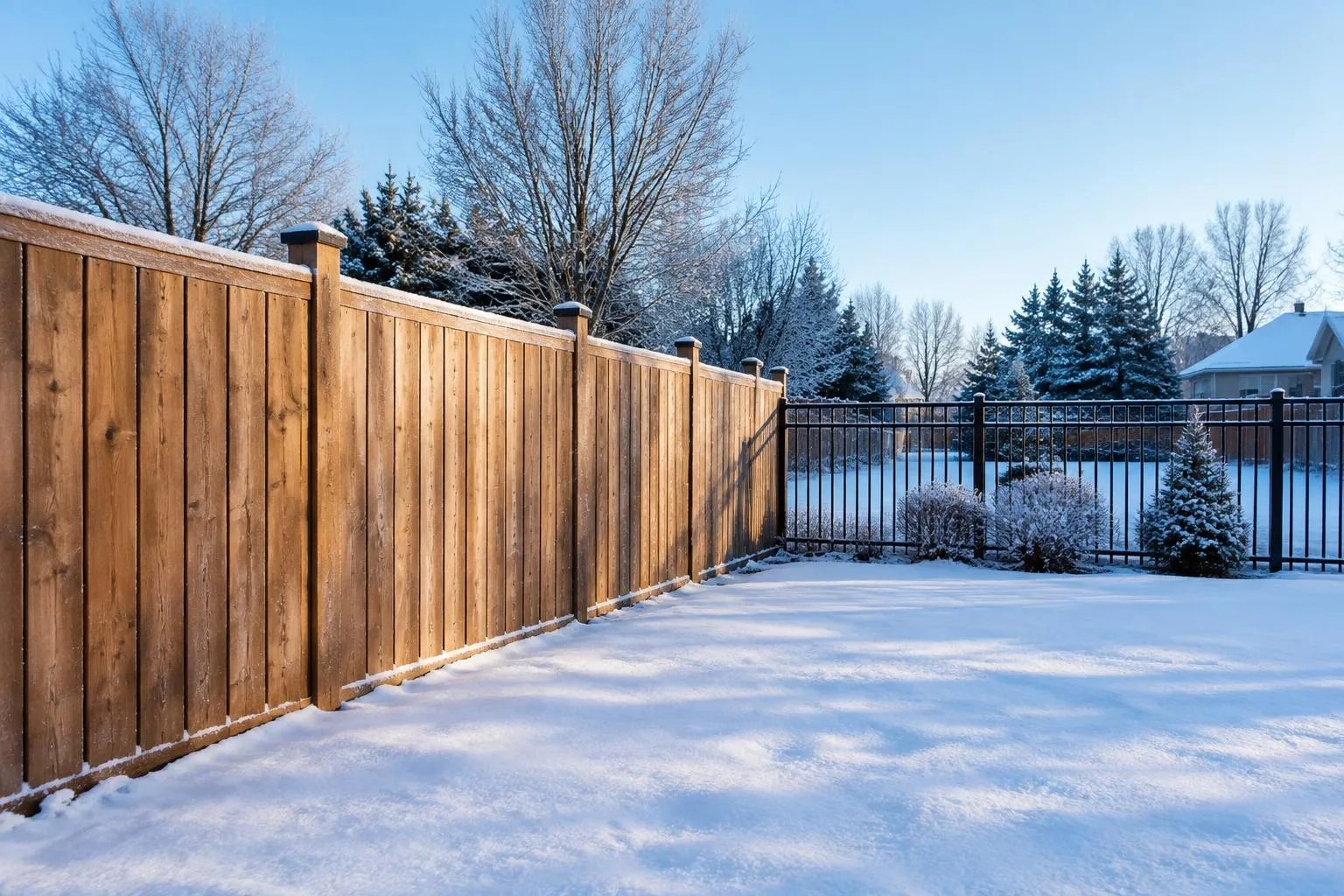
Best Fence Material for Ontario Winters
There is no single best fence material for Ontario winters; the foundation matters more than the board. With posts set about 4 ft deep in concrete below frost, vinyl, aluminum and composite offer the longest low-maintenance lifespans (roughly 20–30+ years), while pressure-treated wood remains the value choice for privacy.
Read guide →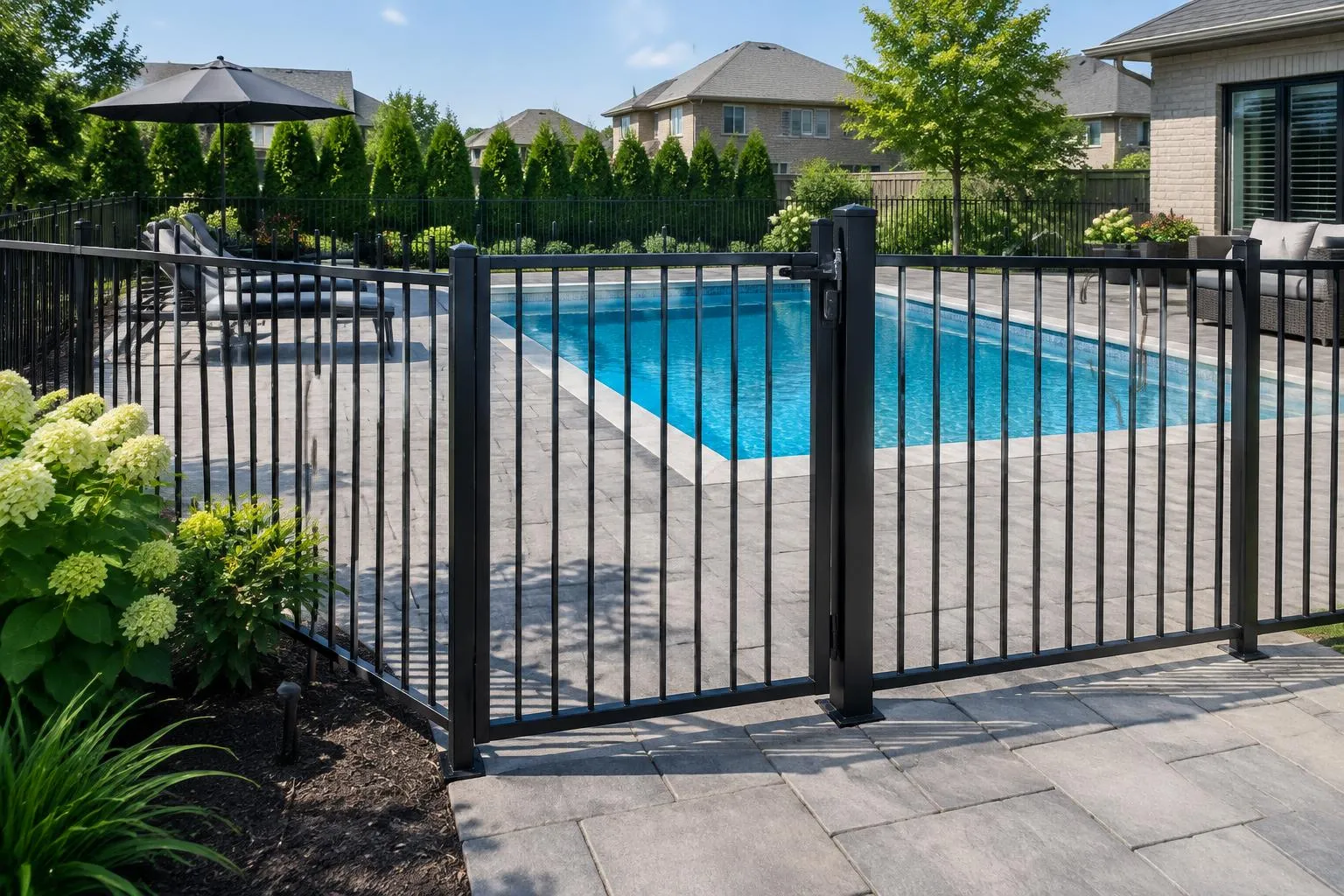
Pool Fence Requirements in Hamilton, Burlington & Oakville
In Hamilton, a pool enclosure needs a building permit and must be at least 1.5 m high measured outside, with no opening that passes a 100 mm sphere and self-closing, self-latching gates latched on the inside at least 1.35 m up. Burlington and Oakville have their own pool by-laws, and Oakville requires a permit before building. Confirm current rules with your municipality before building.
Read guide →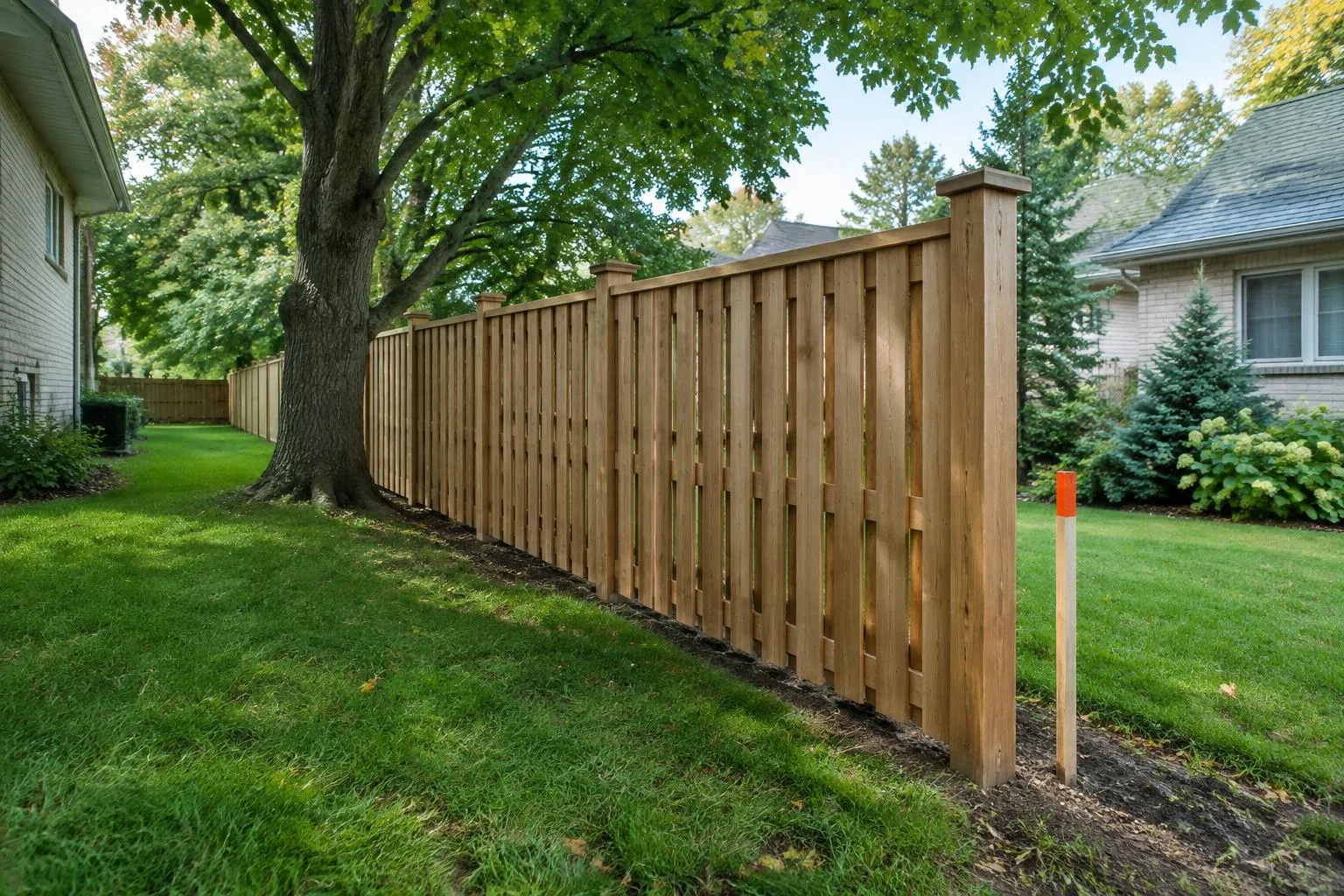
Building a Fence on the Property Line in Ontario
Before building on or near a property line in Ontario, confirm the line from a survey and agree the plan with your neighbour in writing. The Line Fences Act can arbitrate cost sharing where it applies, but it cannot decide where the boundary is. Oakville and Burlington use their own division fence by-laws.
Read guide →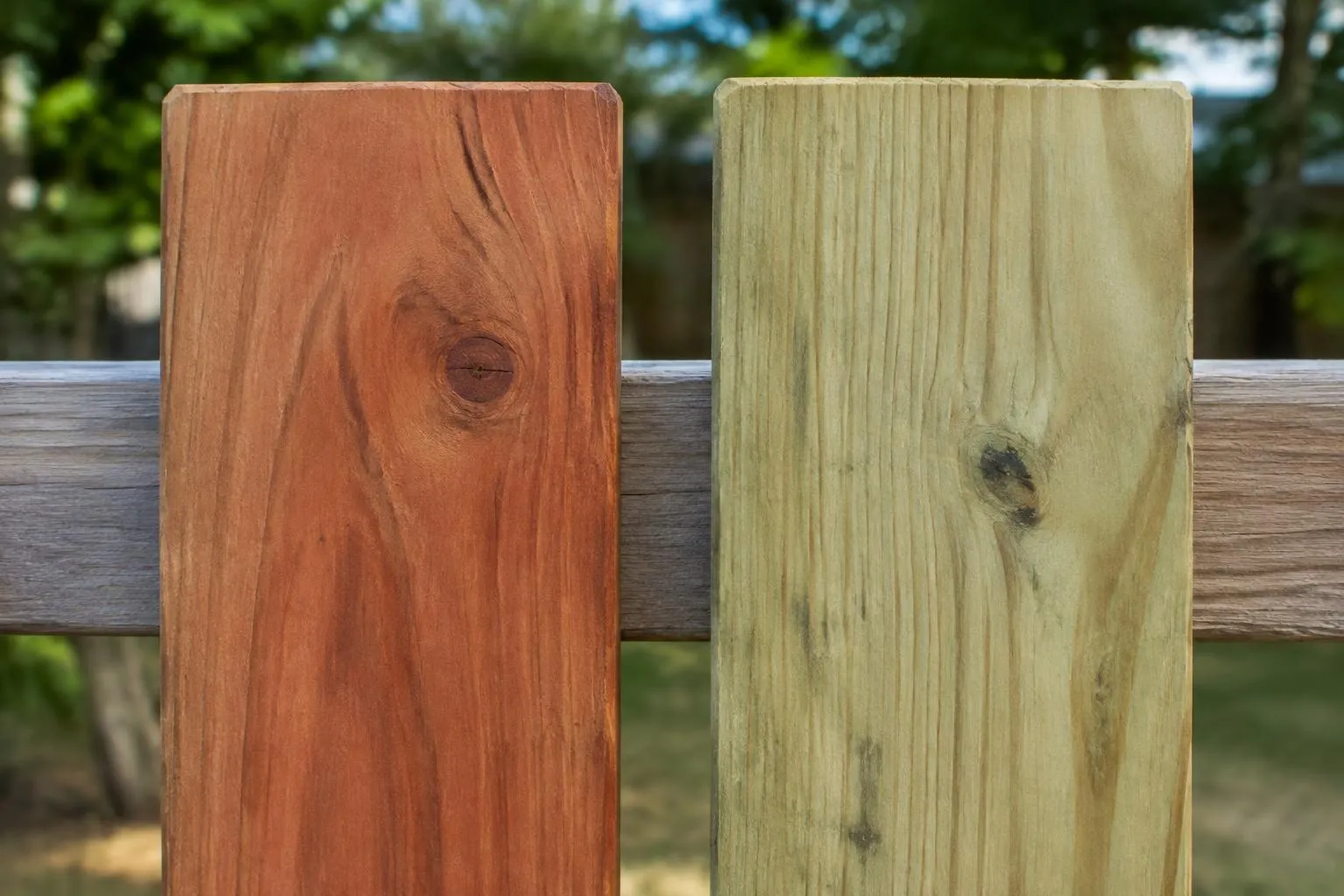
Cedar vs Pressure-Treated Fence: An Honest Comparison
Pressure-treated wood is the more affordable, widely chosen privacy fence, at a typical Ontario installed range (2026) of $30–$55 per linear foot with a 15–20 year lifespan. Cedar costs more at $45–$75 but offers richer natural colour, lighter weight and 15–25 years. Your exact price comes from an on-site quote.
Read guide →