Best for
- Owners who want cedar character with near-zero finish upkeep
- Premium modern backyards and pool-adjacent landscapes
- Horizontal privacy screens with consistent colour
- Yards where rot and insects are recurring concerns

 AntoineAsphalt.ca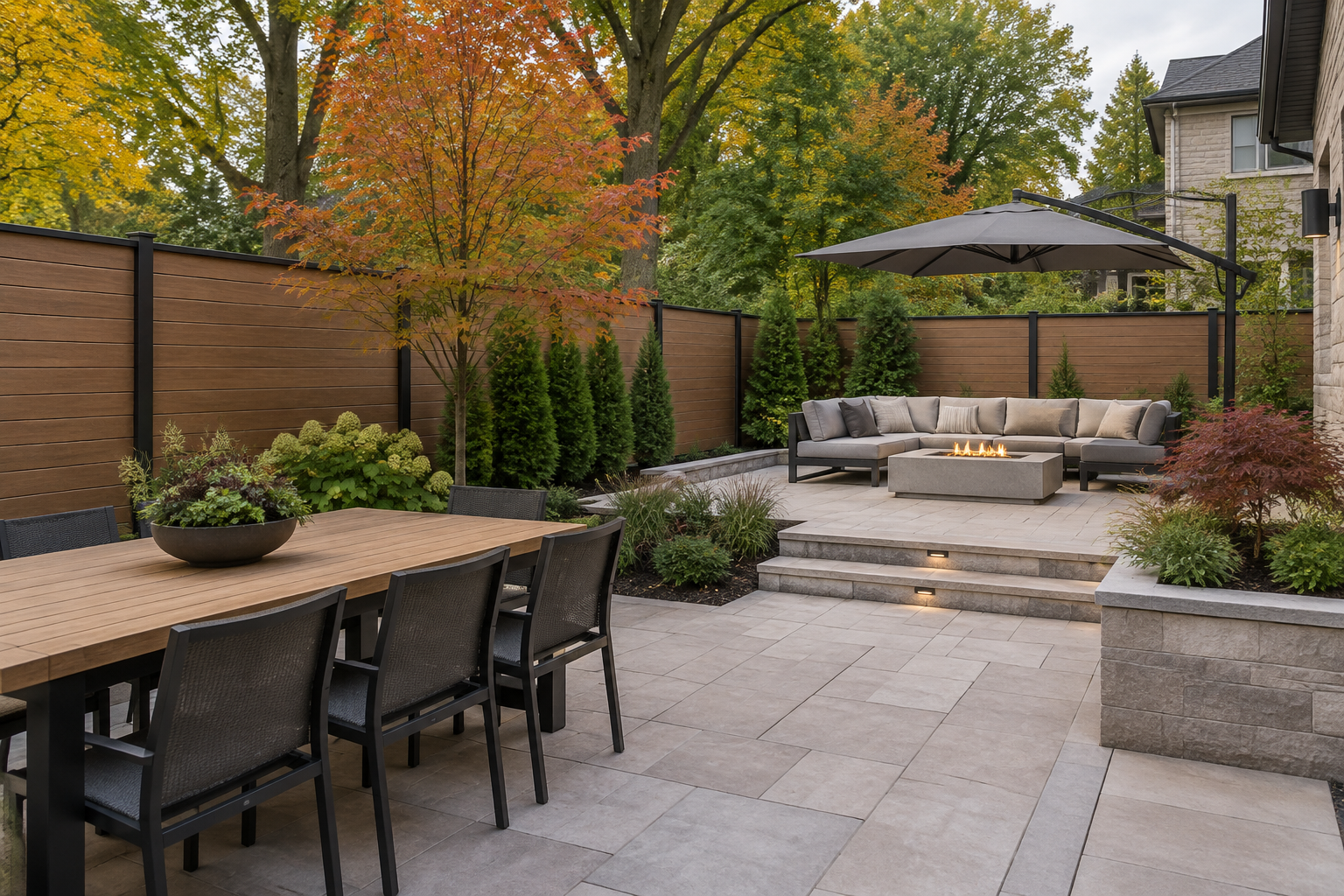
Fences · Composite · Hamilton
Composite fencing uses wood-fibre and plastic or capped composite boards—often framed with aluminum—to create cedar-like privacy without staining, rot or insect damage. Typical Ontario installed ranges (2026) are $55–$95 per linear foot, with a typical 25–30 year lifespan.
Composite fencing uses wood-fibre and plastic or capped composite boards—often framed with aluminum—to create cedar-like privacy without staining, rot or insect damage. Typical Ontario installed ranges (2026) are $55–$95 per linear foot, with a typical 25–30 year lifespan. Your exact price comes from an on-site quote.
Fit before finish
Profiles & details
Long capped boards create a composed architectural backdrop.
Upright profiles bring a familiar fence rhythm with composite durability.
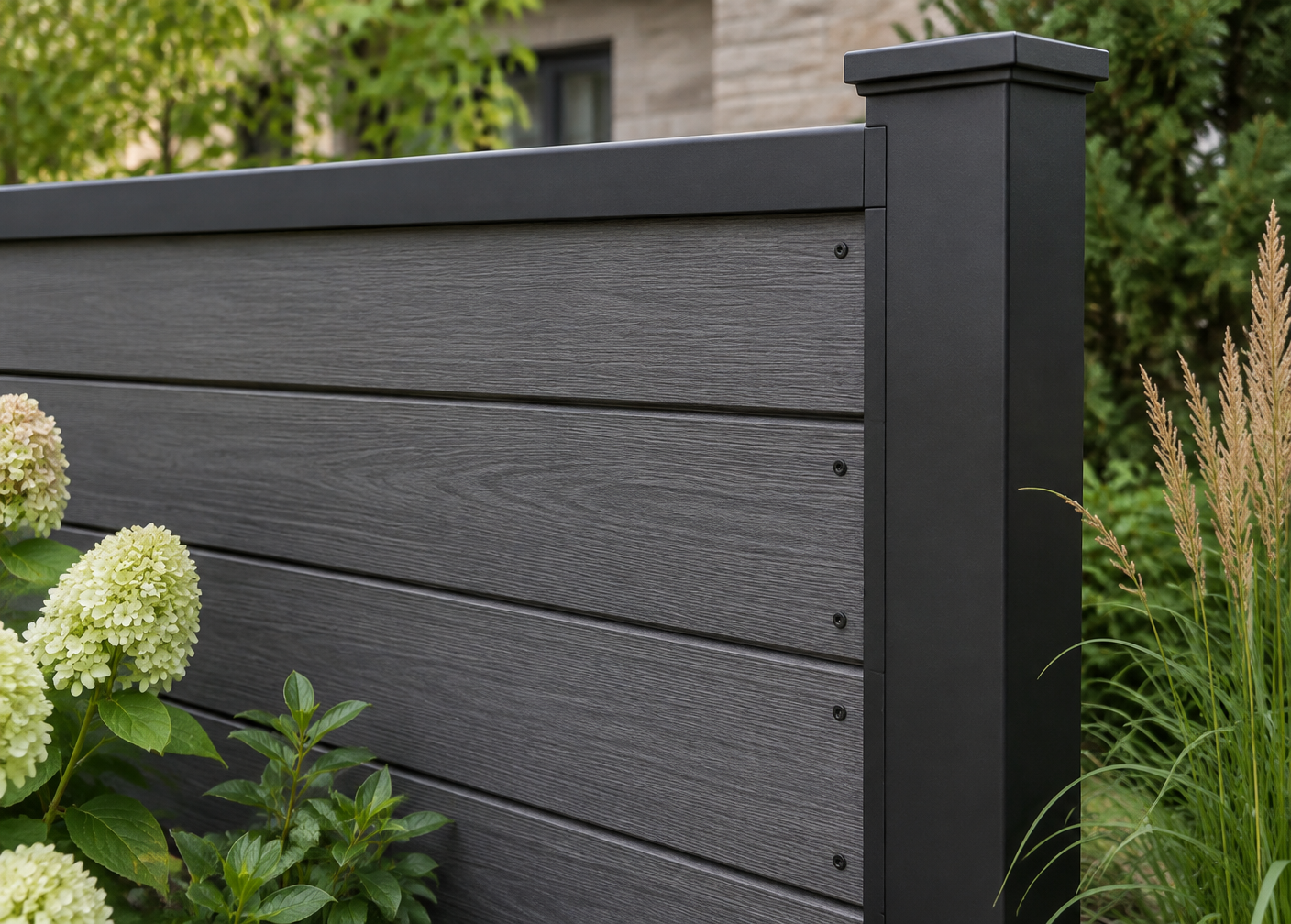
Black posts and rails add stiffness and crisp contrast.
Pigment carried through the board makes ordinary wear less conspicuous.
Balanced guidance
Material decision
Modern, uniform boards · Premium low-maintenance yards
$55–$95/linear ft
Premium natural grain · Warm, architectural yards
$45–$75/linear ft
Typical Ontario installed ranges (2026). Your exact price comes from an on-site quote.
| Material | Look | Privacy | Lifespan | Maintenance | Typical Ontario installed range (2026) |
|---|---|---|---|---|---|
| Pressure-Treated Wood | Classic warm wood | 5/5 | 15–20 years | Higher | $30–$55 per linear foot |
| Cedar | Premium natural grain | 5/5 | 15–25 years | Higher | $45–$75 per linear foot |
| Vinyl | Crisp, matte or woodgrain | 5/5 | 25–30+ years | Low | $45–$85 per linear foot |
| Chain Link | Open and practical | 1/5 | 15–20+ years | Low | $15–$40 per linear foot |
| Aluminum | Black modern or ornamental | 2/5 | 20–30+ years | Low | $35–$65 per linear foot |
| Composite | Modern, uniform boards | 5/5 | 25–30 years | Low | $55–$95 per linear foot |
Planning range
Below grade first
Composite is a system rather than a substitute board. We coordinate board weight, aluminum support, expansion allowances and gate framing before choosing spans.
Set structural posts about 4 ft below frost depth in concrete
Use rails and post spacing approved for the selected composite system
Allow manufacturer-specified expansion at board ends
Support heavier boards and gate leaves without over-spanning
Step or rack compatible assemblies to follow grade cleanly
A post set about 4 ft deep extends below local frost depth, helping the footing resist seasonal movement.
Ownership timeline
Use water, mild soap and a soft brush to remove pollen and organic residue.
Review board-end clearances, rail connections, hinges and latch alignment after freeze–thaw.
Avoid harsh solvents and high-pressure cleaning; follow the board manufacturer’s care guidance.
Hamilton · Burlington · Oakville
General height and visibility rules still apply; pool-adjacent horizontal profiles must also be checked for climbability.
Confirm zoning and visibility restrictions, then verify the selected product against separate pool rules where applicable.
Solid composite suits rear and side yards more readily than the front yard, where open-lattice requirements can apply above 1.0 m.
Composite can serve a pool enclosure only when the complete system is non-climbable and its height, openings and gate meet the local by-law. Confirm current rules with your municipality before building.
Confirm current rules with your municipality before building.
Read the fence bylaw guide →Material-specific answers
Composite feels denser and often has a more convincing wood texture. Vinyl is lighter and spans a broader price range. Both avoid staining; the better choice depends on appearance, structure and product quality.
Composite has the higher initial market range but avoids recurring stain work. Cedar offers authentic grain at a lower range. Compare the complete installed system and expected maintenance, not boards alone.
Exterior colour changes to some degree under ultraviolet exposure. Quality capped products are designed to resist uneven fading, while uncapped products and dark colours can behave differently.
Yes. Compatible systems can be stepped, and individual boards can be cut where the design allows. The post and rail layout should be resolved before cutting.
The board itself resists rot, but the fence still relies on posts set below frost depth, drainage and room for thermal movement.
Start with water, mild soap and a soft brush. Avoid aggressive pressure or solvents and follow the product manufacturer’s cleaning instructions.
Local installation
Hamilton
Burlington
Oakville
Start on site
Share the length, height, gate needs and city. We’ll arrange the free on-site visit that produces your exact quote.