
 AntoineAsphalt.ca
What Is the White Haze on My New Pavers?
Quick answer
The white, powdery haze on new concrete pavers is usually efflorescence: natural calcium salts that moisture carries to the surface. Unilock says it does not affect the strength or durability of the pavers and is cosmetic and "temporary in nature." Scrub it with dish soap, water and a stiff plastic brush, and don't seal pavers until it's gone.
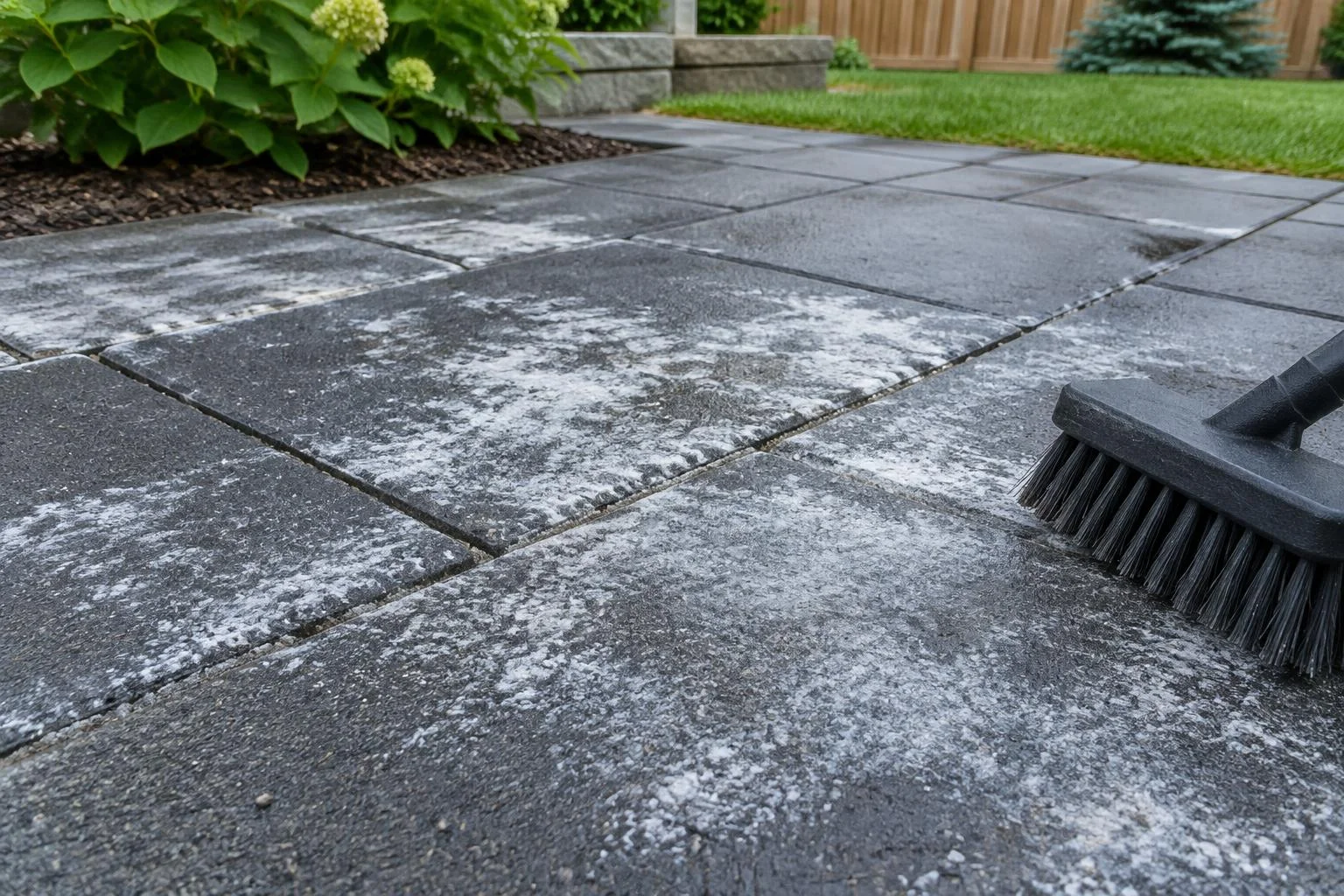
What causes efflorescence on pavers?
As concrete cures, it makes calcium hydroxide. Moisture carries it to the surface, where it reacts with carbon dioxide in the air and leaves calcium carbonate, a white powder (Unilock).
Moisture can come from rain, sprinklers, groundwater, poor drainage or dew. It tends to be easier to see on darker pavers.
Is efflorescence a defect? Does it damage pavers?
No. Unilock says: "Efflorescence will not compromise the strength or durability of your concrete pavers." Permacon says it "affects neither the intrinsic technical qualities nor the structural integrity."
Because it is cosmetic, Unilock, Techo-Bloc and Permacon all exclude it from their warranties.
How long does efflorescence take to go away?
Unilock calls it "temporary in nature." It usually fades as the pavers weather, and the timing depends on how much moisture keeps reaching them.
It can come back if water keeps getting into the pavers, for example from poor drainage, leaks or high groundwater (Unilock).
How do I remove efflorescence from pavers?
- Scrub with dish soap, water and a stiff plastic brush (Unilock).
- Don't use a wire brush. It can leave rust marks.
- If haze stays, use an acid-based efflorescence remover from a landscape supplier. Unilock warns it "may slightly change the surface color," so test a hidden spot first.
What about pressure washing? We found no source that says it removes efflorescence. If you power-wash pavers at all, Unilock advises low pressure, a 30° angle, a fan nozzle, and keeping the tip about 12 inches from the surface.
When can I seal pavers that have efflorescence?
Only once it's gone. Unilock says "Pavers must be clear of efflorescence before applying a sealant." It suggests waiting about 2 to 3 months after installation, "or even up to one year."
Is it efflorescence or polymeric sand haze?
They are two different things. Polymeric haze is residue left on the surface by polymeric joint sand. Unilock and Techo-Bloc list it as a separate warranty exclusion. We did not find a reliable source on how to tell them apart by look, so ask your installer to check.
Efflorescence timeline
- Install day
New concrete pavers can show white haze as they cure.
- About 2–3 months
Earliest point Unilock suggests for sealing, if no haze remains.
- Up to 1 year
Unilock says some pavers need this long before sealing.
- Any time
It can come back if water keeps getting in (drainage, leaks, groundwater).
Timings from Unilock. Your pavers may differ.
Frequently asked questions
Is efflorescence covered by my paver warranty?
No. Unilock, Techo-Bloc and Permacon all exclude it, because it doesn't affect strength.
Can I pressure-wash efflorescence off?
We found no source that confirms it. Start with soap, water and a stiff plastic brush. If you power-wash, Unilock advises low pressure, a fan nozzle and about 12 inches of distance.
Should I seal my pavers to stop efflorescence?
Not yet. Unilock says pavers must be clear of efflorescence before sealing, which usually means waiting 2 to 3 months or longer.
Why did the white haze come back?
Moisture is still getting into the pavers. Unilock links repeat efflorescence to poor drainage, leaks or high groundwater.
Related guides & services
If haze or stains won't budge, see our interlock cleaning and sealing service.
Acid cleaners can change paver colour. Follow the product label, wear the protection it lists, and test a hidden area first.
Ask about your project
Contact Antoine Landscape Contractors at (647) 459-7775 or share your project details below.