
 AntoineAsphalt.ca
What Native Plants Grow Well in Hamilton and Halton?
Quick answer
Hamilton's Green Venture grows and gives out native plants such as purple coneflower, black-eyed Susan, butterfly weed, nodding onion, prairie smoke, swamp milkweed and New Jersey tea for local gardens. Hamilton has been rated Zone 6b, with the escarpment "Mountain" a colder 6a, and Natural Resources Canada's 2025 map update moved most of Canada ½ to 2 zones warmer. Check your exact zone with NRCan's municipal lookup.
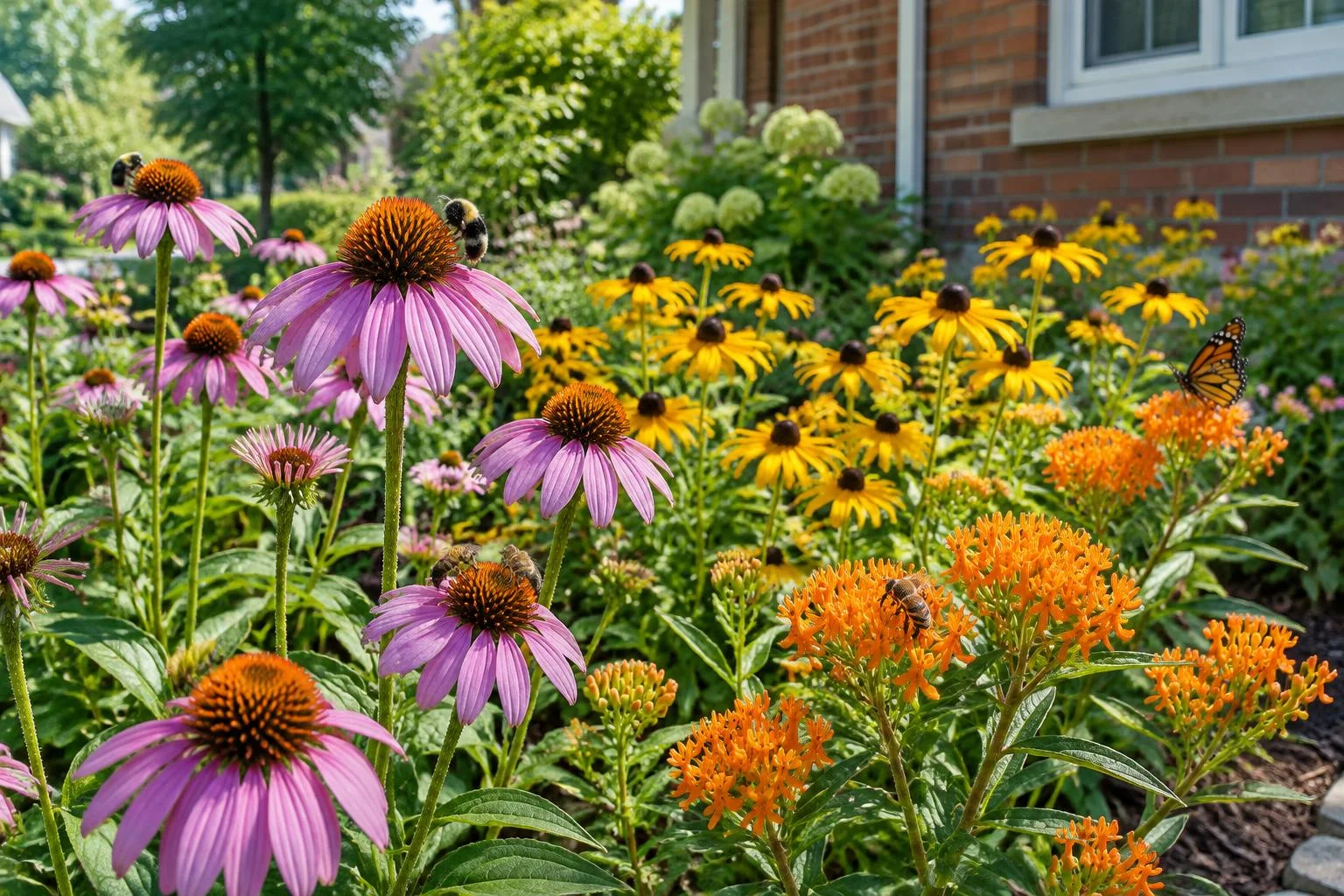
Which native plants are grown locally for Hamilton gardens?
Green Venture, a Hamilton organization, grows and distributes these native plants:
- Black-eyed Susan (Rudbeckia hirta)
- Purple coneflower
- Butterfly weed
- Common milkweed
- Swamp milkweed
- Nodding onion
- Prairie smoke
- Cardinal flower
- Blue vervain
- Giant ironweed
- New Jersey tea (a native shrub)
- Virgin's bower
Our source doesn't list sun, shade or soil needs for each plant. Check the plant tag or the resources Green Venture links to before you plant.
What hardiness zone is Hamilton in?
- Older rating: Hamilton has been listed as Zone 6b, with the Mountain at a colder 6a (Growers Guide, July 2026). The page doesn't say which map edition it used.
- 2025 update: Natural Resources Canada updated its map in 2025 using 1991–2020 climate data. Most of Canada moved up by ½ to 2 zones, and the GTA is now Zone 7a (Halton Master Gardeners).
We have not confirmed the exact 2025 zones for Hamilton, Burlington or Oakville. Use NRCan's municipal lookup at planthardiness.gc.ca.
Why does the Mountain grow differently from the lower city?
The Mountain (above the escarpment) has a shorter growing season and gets more lake-effect snow. The lower city is milder.
The soils differ too. The upper city sits mostly on glacial till. The lower city has lake-laid sediments, including both sand and clay (Wikipedia, Geography of Hamilton).
When is the last frost in Hamilton?
Sources don't agree. One page gives an average last frost of April 25 and a first frost of October 28, but the same page's FAQ says "early-to-mid May" for the last frost (Growers Guide). Treat late April to mid-May as the risky period for tender plants.
Where can I find more native plant help near Hamilton?
- Green Venture: grows native plants and links to local programs.
- Hamilton Pollinator Paradise: a project of Environment Hamilton and the Hamilton Naturalists' Club.
- Carolinian Canada: Hamilton is in the Carolinian zone. Carolinian Canada runs an "In the Zone" native gardening program.
- City of Hamilton: publishes an approved species list for street trees.
Frequently asked questions
What hardiness zone is Hamilton?
It has been listed as 6b, with the Mountain at 6a. Canada's 2025 map update moved most areas ½ to 2 zones warmer, so check NRCan's lookup for your address.
Did hardiness zones change in 2025?
Yes. Natural Resources Canada updated its map using 1991–2020 climate data, and most of Canada moved up by ½ to 2 zones.
Is the Hamilton Mountain colder than the lower city?
Yes. It has a shorter growing season and more lake-effect snow, and is listed about half a zone colder.
Where can I get native plants in Hamilton?
Green Venture grows and distributes native plants locally.
Related guides & services
See our garden beds and plants service for planting design and installation.
Ask about your project
Contact Antoine Landscape Contractors at (647) 459-7775 or share your project details below.