
 AntoineAsphalt.ca
Paver care guide
Polymeric Sand and Paver Sealing: A Practical Guide
Polymeric sand is joint sand with binders that harden when misted, locking pavers together and discouraging weeds and washout. It must go onto dry pavers, be swept and compacted into full joints, and have haze removed before misting per the maker's instructions. Sealers are optional; choose natural or enhanced finishes and recoat on the maker's schedule.
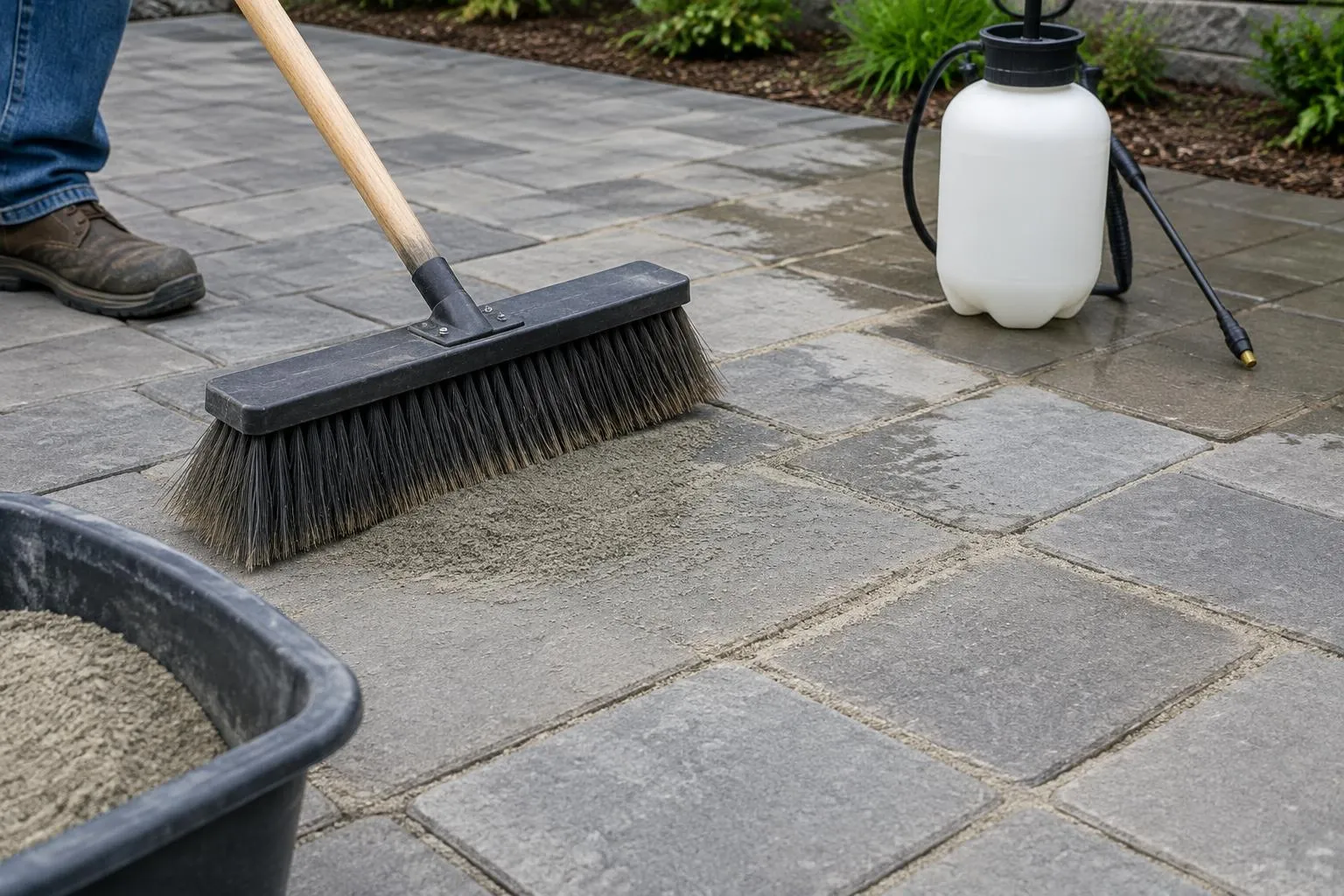
Polymeric sand is joint sand with binders that harden when misted, locking pavers together and discouraging weeds and washout. It must go onto dry pavers, be swept and compacted into full joints, and have haze removed before misting per the maker's instructions. Sealers are optional; choose natural or enhanced finishes and recoat on the maker's schedule.
Key takeaways
- Polymeric sand needs dry pavers, full joints, careful haze removal and misting exactly as the maker describes.
- Most failures — haze, washout, soft joints — trace back to moisture, shallow fill or over-watering.
- Re-sand when joints are low, washed out or growing weeds; clean first.
- Sealing is optional; follow the sealer maker's guidance for product, weather and recoat timing.
What does polymeric sand do?
The joints between pavers are part of the structure. Joint material locks the units together so loads spread across neighbouring pavers instead of pushing single units down. Ordinary joint sand does that job but can wash out, and it gives weeds and ants an easy home. Polymeric sand is a graded sand blended with binders. Once it is swept into the joints, compacted and activated with water, the binders harden into a firm but slightly flexible joint.
That firmer joint resists washout from rain and hoses, discourages weeds and insects, and keeps joints looking neat. It does not make the surface waterproof and it does not fix a failing base; it works on top of a well-built installation.
How is polymeric sand installed?
Every product has its own instructions, and they are not interchangeable. The basic sequence usually looks like this:
- Start with pavers and joints that are completely dry, with no rain in the forecast for the product's cure window
- Spread the sand and sweep it diagonally across the joints until they are full
- Run a plate compactor with a protective pad to settle the sand, then top up and repeat until joints stay full
- Remove every trace of sand dust from paver surfaces with a soft broom and a leaf blower on low
- Mist the surface in stages exactly as the maker instructs, without flooding or washing sand out
- Keep traffic off for the cure time the maker specifies
Why does polymeric sand fail?
When polymeric sand goes wrong, the cause is usually one of a handful of installation problems.
| Problem | What it looks like | Usual cause |
|---|---|---|
| Haze | A cloudy film on the paver surface | Dust left on pavers before misting, or damp pavers |
| Washout | Joints empty after rain | Joints not filled or compacted fully; over-watering during activation |
| Soft joints | Sand stays loose or crumbly | Too little water, too much water, or rain before curing |
| Cracking | Hairline cracks in the joint | Shallow fill, or movement in the base below |
| Weeds returning | Growth in some joints | Low joints, debris, or sand that never fully hardened |
When should pavers be re-sanded?
Plan to re-sand when joints have dropped noticeably below the paver edges, when sand has washed out, or when weeds and ants have moved in. Re-sanding almost always follows a thorough cleaning, because the old material, dirt and organic growth need to come out of the joints before new sand goes in. After re-sanding, the new joints need the same dry conditions and careful activation as a new installation.
If joints keep emptying in the same spot, look at water. A downspout, a low area or a slope that sends water across the surface can keep undermining the joints no matter how often they are refilled.
What types of paver sealer are there?
Sealers are optional. They can make cleaning easier, help resist stains and refresh colour. Finishes generally fall into natural or matte, which leaves the paver looking much as it does unsealed, and enhanced or wet-look, which deepens colour and adds sheen. Chemistry falls into two broad groups: film-forming sealers that sit on the surface, and penetrating sealers that soak into the paver. Film-forming products tend to change the look more; penetrating products change it less.
Which suits you depends on the paver, the look you want and how the surface is used. Some paver makers specify compatible sealers, so check their guidance first. Slip resistance is worth asking about, especially around pools and steps.
When should pavers be sealed and recoated?
Sealer needs clean, completely dry pavers, a dry forecast and temperatures within the limits on the product label. It is usually applied after cleaning and re-sanding, once any polymeric sand has fully cured. Recoat timing depends on the product and the traffic the surface sees; follow the sealer maker's guidance instead of a fixed calendar.
New concrete pavers often show efflorescence in their first season, so many people wait until it has faded or been cleaned before sealing. Sealing over efflorescence can trap it.
What is efflorescence?
Efflorescence is the white, powdery haze that can appear on new concrete pavers. It is a natural result of salts in the concrete migrating to the surface with moisture. It is cosmetic, it often fades on its own with weather and use, and when it needs attention it is cleaned with a product made for efflorescence, following the maker's directions. It is not a defect in the installation.
What does a simple care calendar look like?
A light seasonal routine keeps joints and surfaces in good shape.
- Spring: sweep, look for low joints, heaving or puddles after the thaw
- Late spring or summer: clean and re-sand where needed; seal if you choose to, in dry weather
- Fall: clear leaves promptly so they do not stain or hold moisture
- Winter: use plastic-edged tools and follow the paver maker's de-icing guidance
When should I call a professional?
Re-sanding a small patio is a manageable weekend job if you follow the maker's instructions carefully. Larger driveways, surfaces with heavy staining, efflorescence you cannot clear, or joints that fail repeatedly are worth handing to a contractor. Our interlock cleaning and sealing service covers surface-appropriate cleaning, polymeric re-sanding and sealing, and pricing is quoted on site.
Why do weeds and ants still appear in sanded joints?
Most weeds in interlock grow from seeds that land on top of the joint material, not from below. Organic debris collects in the joints, holds moisture and gives seeds a place to root. Regular sweeping, cleaning out debris and keeping joints full reduce the problem. Ants tend to move in where joint sand is loose or low, so properly installed polymeric sand usually helps there too.
If a joint has been colonised repeatedly, cleaning it out and re-sanding that area is usually more effective than repeated spot treatments.
How should pavers be prepared before re-sanding or sealing?
Preparation decides most of the outcome. The surface needs to be cleaned with a method suited to the paver, old joint material removed to a suitable depth, stains treated with the right product, and the whole area allowed to dry completely. Sealing over trapped moisture or residue can cloud the finish, and polymeric sand placed on damp pavers can leave haze.
Timing depends on the weather as much as the calendar. Check the forecast and follow the temperature and drying limits on the product label.
How do I choose between a natural and a wet-look finish?
A natural or matte finish keeps the pavers looking close to how they came from the manufacturer, which suits many homes and is less likely to look shiny or slippery. An enhanced or wet-look finish deepens colours and can make older pavers look fresher, but it changes the character of the surface. Test a small, out-of-the-way area first so you can see the finished look before committing.
Does sealing change how pavers feel underfoot?
Some sealers, particularly film-forming or high-gloss types, can change how a surface feels when wet. Around pools, steps and entrances, that matters. Choose a product whose maker states suitable slip resistance for the use, or ask about adding a slip-resistant additive where the manufacturer allows it. A penetrating or matte sealer is often the safer choice in these areas.
Frequently asked questions
How long does polymeric sand last?
It depends on the product, traffic, water and how well it was installed. Re-sand when joints are low, washed out or growing weeds.
Can polymeric sand be installed on wet pavers?
No. Pavers and joints need to be dry, or the sand can set on the surface and leave haze.
How do I remove polymeric sand haze?
Haze removal depends on the product; follow the sand maker's guidance or use a cleaner made for the purpose. Prevention — blowing off all dust before misting — is much easier.
Do I have to seal my pavers?
No. Sealing is optional. It can make cleaning easier and refresh colour, but pavers perform without it.
What is the difference between wet-look and natural sealer?
Wet-look or enhanced sealers deepen colour and add sheen; natural or matte sealers keep the paver looking close to unsealed.
How often should pavers be resealed?
Follow the sealer maker's guidance. Recoat timing depends on the product and the traffic the surface sees.
Is the white haze on my new pavers a defect?
Usually not. It is likely efflorescence, a natural and cosmetic effect that often fades on its own.
Can I seal over efflorescence?
It is best to let efflorescence fade or clean it first, because sealing over it can trap the haze.
Related interlock information
From guide to site plan
Get an on-site interlock quote
Call (647) 459-7775 or send the essentials. Your exact price comes from an on-site quote.