
 AntoineAsphalt.ca
When Is the Best Time to Install Interlock in Ontario?
Quick answer
Interlock can be installed whenever the ground isn't frozen, which Unilock puts at roughly May 1 to December 1. The real late-season limit is polymeric joint sand: one common product needs temperatures above 5 °C for 48 hours after it's applied and no rain for 24 hours. With that product, wait at least 24 hours to walk on it and 72 hours to drive on it, and wait about 2 to 3 months before sealing.
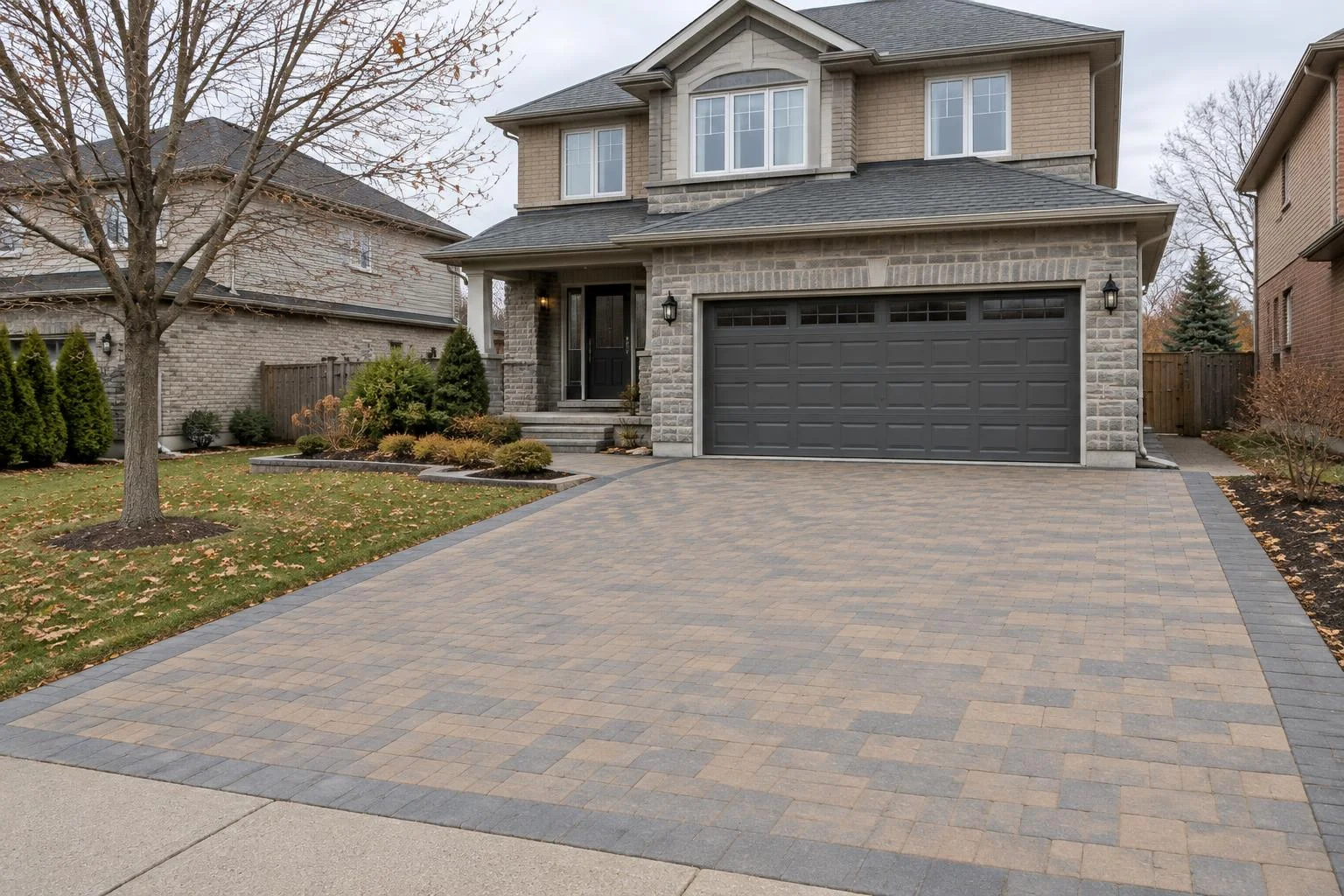
What months can interlock be installed in Ontario?
Unilock says the right time is whenever the ground isn't frozen, "generally May 1 to December 1." Some regions can work all year.
Late-fall jobs are possible. The deciding factor is usually the joint sand, not the pavers.
How cold is too cold for polymeric sand?
Every polymeric sand has its own limits. As an example, the data sheet for Sika/Techniseal Evolution Pro says:
- Air and surface temperature must be between 5 °C and 35 °C when it goes down.
- Air and surface must stay above 5 °C for at least 48 hours after.
- Don't install if rain is expected within 24 hours (48 hours for joints wider than 13 mm).
- "Curing time will be longer in cold or damp conditions."
Other products differ, so check the bag your installer uses.
When can I walk on new interlock?
For Evolution Pro, the maker says to "allow a minimum of 24 hours" before foot traffic. In cold or damp weather, allow longer.
When can I drive or park on a new interlock driveway?
For Evolution Pro, "allow at least 72 hours" before vehicles. We found no manufacturer statement on driving on pavers right after compaction, so ask your installer which joint sand was used and follow its label.
Driveways are also built deeper. Unilock calls for about 10 to 12 inches of road base under driveways, compared with about 6 inches under patios and walkways, plus 1 inch of bedding sand.
When should I seal new pavers?
Wait until any white haze (efflorescence) is gone. Unilock suggests about 2 to 3 months after installation, "or even up to one year" in some cases.
New interlock timeline calculator
- Foot traffic · install date + 24 hours
- October 19, 2026
- Vehicles · install date + 72 hours
- October 21, 2026
- Earliest sealing check · install date + 2 to 3 months
- December 18, 2026 – January 18, 2027
only if no efflorescence remains.
Based on Sika/Techniseal Evolution Pro and Unilock. Cold or damp weather means longer cure times. Your product's label wins.
Frequently asked questions
Can interlock be installed in winter in Hamilton?
Not while the ground is frozen. Unilock gives roughly May 1 to December 1 as the usual window.
When can I park on my new interlock driveway?
With Evolution Pro joint sand, at least 72 hours. Other products differ, so ask which one was used.
Can polymeric sand go down if rain is in the forecast?
Not for Evolution Pro if rain is expected within 24 hours, or 48 hours for joints wider than 13 mm.
How deep is the base under a driveway compared with a patio?
Unilock calls for about 10 to 12 inches of road base for driveways and about 6 inches for patios and walkways, plus 1 inch of bedding sand.
Related guides & services
Planning a patio or driveway? See our interlock and hardscape work and ask about timing for your project.
Cure times depend on the joint sand used and the weather. Follow the product label.
Ask about your project
Contact Antoine Landscape Contractors at (647) 459-7775 or share your project details below.