
 AntoineAsphalt.ca
Decking material guide
Composite vs Wood Decking: Which Is Best in Ontario?
Pressure-treated wood is the lowest-cost deck at about $45–$65 per sq ft but needs regular staining and lasts roughly 15–20 years; composite costs about $65–$95 per sq ft and typically lasts 25–30+ years with just washing. Cedar sits between for natural warmth, and PVC is the premium, lowest-upkeep choice. Your exact price comes from an on-site quote.
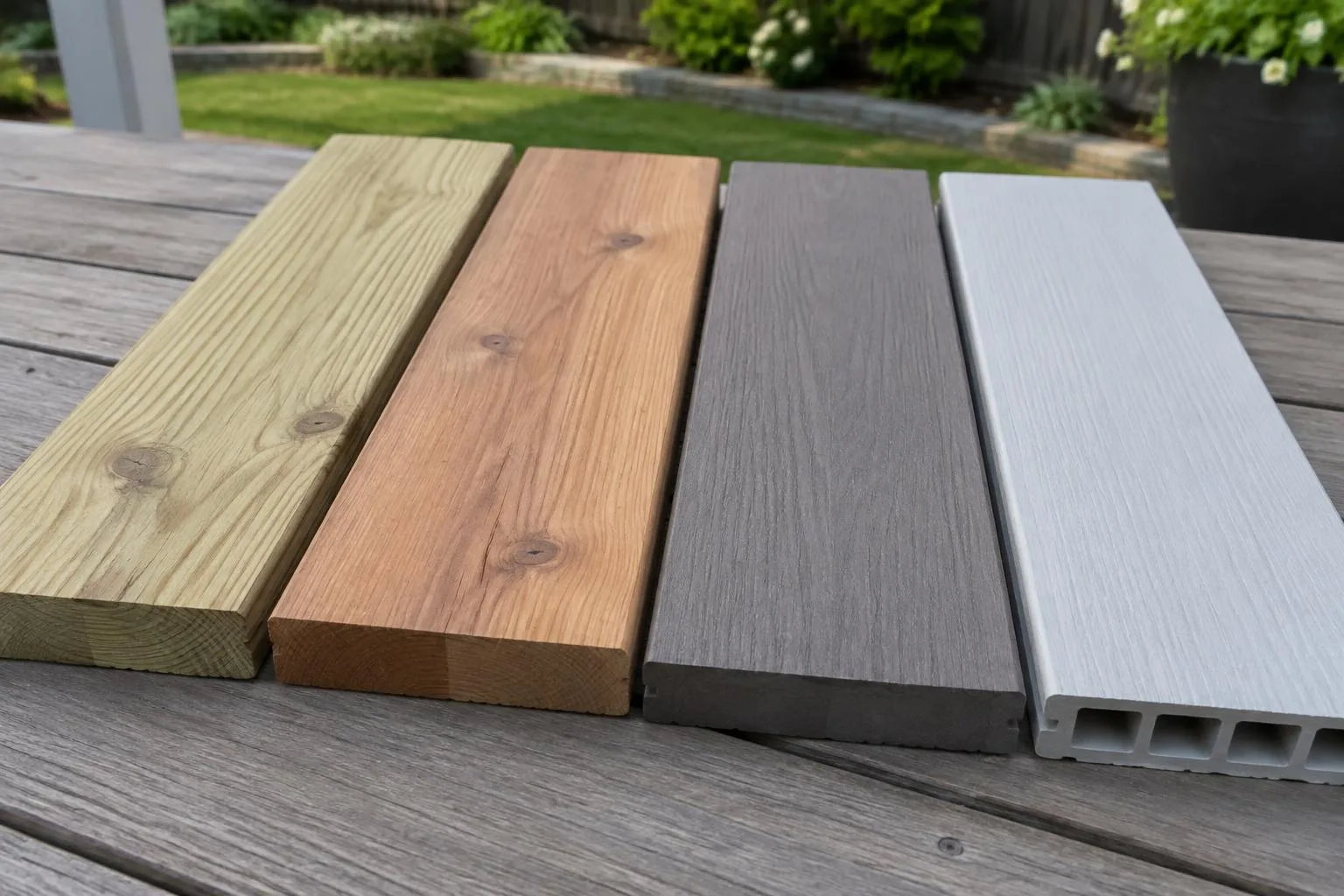
Pressure-treated wood is the lowest-cost deck at about $45–$65 per sq ft but needs regular staining and lasts roughly 15–20 years; composite costs about $65–$95 per sq ft and typically lasts 25–30+ years with just washing. Cedar sits between for natural warmth, and PVC is the premium, lowest-upkeep choice. Your exact price comes from an on-site quote.
How do the four decking materials compare?
The ranges below are market data for Ontario. Lifespans are approximate and assume proper installation and maintenance.
| Material | Installed range | Approx. lifespan | Maintenance | Comfort |
|---|---|---|---|---|
| Pressure-Treated Wood | $45–$65 / sq ft | 15–20 yrs | Clean, stain or seal regularly | Stays comfortable underfoot; needs regular sealing |
| Cedar | $55–$80 / sq ft | 15–25 yrs | Clean, stain or seal regularly | Natural wood feel; softer surface can mark |
| Composite | $65–$95 / sq ft | 25–30+ yrs | Wash; no staining | Darker colours get warmer in full sun |
| PVC | $80–$110 / sq ft | 30+ yrs | Wash; no staining | Lighter colours stay cooler; darker ones warm up in sun |
Typical Ontario installed ranges (2026). Your exact price comes from an on-site quote.
Can I compare two materials side by side?
Pick any two materials to compare cost band, lifespan, maintenance, look and comfort.
How much maintenance does each deck need?
Pressure-treated and cedar need cleaning plus stain or sealer on a regular cycle to limit checking, greying and splintering. Composite and PVC need washing a couple of times a year and do not need staining or sealing. Every material benefits from keeping debris out of board gaps so water can drain.
Which decking gets hot in the sun, and how does it feel?
Wood stays comfortable underfoot in most sun. Darker composite colours get warmer in full sun, and darker PVC does too, while lighter colours stay cooler. Cedar is softer and can mark under furniture; composite and PVC feel uniform and do not splinter. For a south- or west-facing deck in full sun, a lighter board colour is worth considering.
Which decking handles Ontario winters and snow shovelling best?
All four materials handle freeze–thaw when properly built on below-frost footings. Use a plastic shovel on composite and PVC to avoid scratching, and avoid metal-edged tools on softer cedar. Composite and PVC do not absorb meltwater the way unsealed wood can, which helps limit winter wear.
How stable is the colour, and does weight matter?
Wood changes colour as it weathers unless it is stained. Capped composite and PVC hold their colour far better, with warmer natural tones now the most popular. Composite boards are heavier than wood, which matters for framing and for covered or elevated decks; PVC is lighter than composite.
Do composite and PVC need different framing?
Yes. Composite and PVC boards usually need closer joist spacing than many wood decks, especially for diagonal layouts, so the frame is designed around the board. We install joist and beam protection tape on composite and PVC builds, use hidden fasteners and gap boards correctly. The frame underneath is still pressure-treated lumber, so it must be built to last as long as the boards on top.
Which decking costs less to own over time?
Pressure-treated wins on up-front price. Over the life of the deck, wood adds recurring cleaning, staining and board replacement, while composite and PVC trade a higher starting price for less upkeep and a longer typical lifespan. If you plan to stay in the home for many years and dislike annual maintenance, the lower-upkeep materials often make more sense; for a shorter horizon or tight budget, pressure-treated remains a practical choice.
Which decking should I choose for my situation?
Start from how you will use the deck and how long you plan to stay.
- Tightest budget or a rental: pressure-treated
- Natural wood look and aroma: cedar
- Busy family wanting low upkeep: composite
- Pool deck or highest-end finish with the least upkeep: PVC
- Full-sun deck: lighter composite or PVC colours
- Covered deck or pergola: any material, with framing sized for the roof loads
Frequently asked questions
Is composite decking better than wood?
It depends on priorities. Composite costs more up front but typically lasts 25–30+ years with washing instead of staining. Wood costs less and feels natural but needs regular maintenance.
How long does a pressure-treated deck last in Ontario?
Roughly 15–20 years with proper installation and regular maintenance.
Does composite decking get hot?
Darker composite colours get warmer in full sun. Lighter colours stay cooler.
Is PVC worth it over composite?
PVC is the premium option at about $80–$110 per sq ft with a 30+ year typical lifespan and the lowest upkeep. It suits pool decks and top-end builds.
Can I put composite boards on my old wood frame?
Only if the frame is sound and spaced correctly for the new boards. We inspect the frame first and add joist tape when resurfacing.
Is cedar more durable than pressure-treated?
Cedar is naturally rot-resistant and typically lasts about 15–25 years with care, compared with 15–20 for pressure-treated, but it is softer and marks more easily.
Related deck information
From guide to site plan
Get an on-site deck quote
Call (647) 459-7775 or send the essentials. Your exact price comes from an on-site quote.