
 AntoineAsphalt.ca
Pool removal · Hamilton, Burlington & Oakville
Pool Removal & Fill-In in Hamilton, Burlington & Oakville
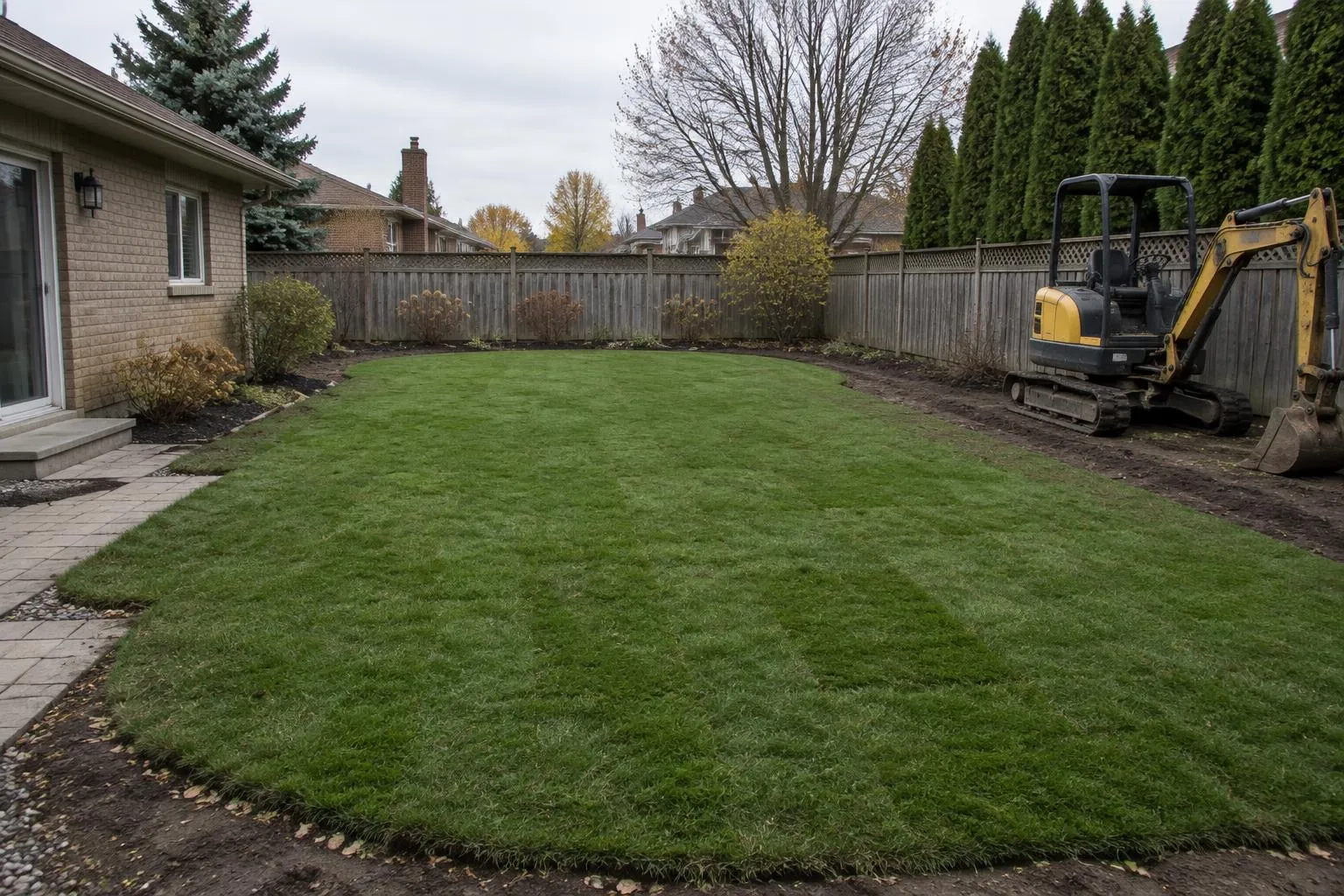
Draining, removing or breaking out the shell, backfilling in compacted lifts and finishing with sod or a new landscape.
Quick answer
There are two methods. Full removal takes the whole shell out and backfills under engineering supervision, best if you may build there or sell. Partial removal cuts the walls at least 18 in below grade, breaks drainage holes in the floor and fills the rest (a US county rule used here as a process reference). Vinyl and fibreglass pools generally come out completely; concrete is the type most often partly left. No credible Ontario price source exists; the only dated reference is US: US$4,000–$16,000 full, US$2,500–$10,000 partial, over 1–7 days (Angi, Oct 12, 2026). Keep the pool enclosure up until the pool is filled.
- ServiceFull and partial inground pool removal and fill-in
- AreasHamilton (incl. Ancaster, Dundas, Stoney Creek, Waterdown/Flamborough), Burlington and Oakville
- CompanyEst. 2020 · 200+ projects
- QuotesFree on-site quotes
- Phone(647) 459-7775
Side by side
Full or partial, step by step
Full removal vs. partial fill-in
How to read this: The same pool removed two ways. Step through to compare a full removal with a partial fill-in.
- Drain
- Remove deck and coping
- Break out the shell
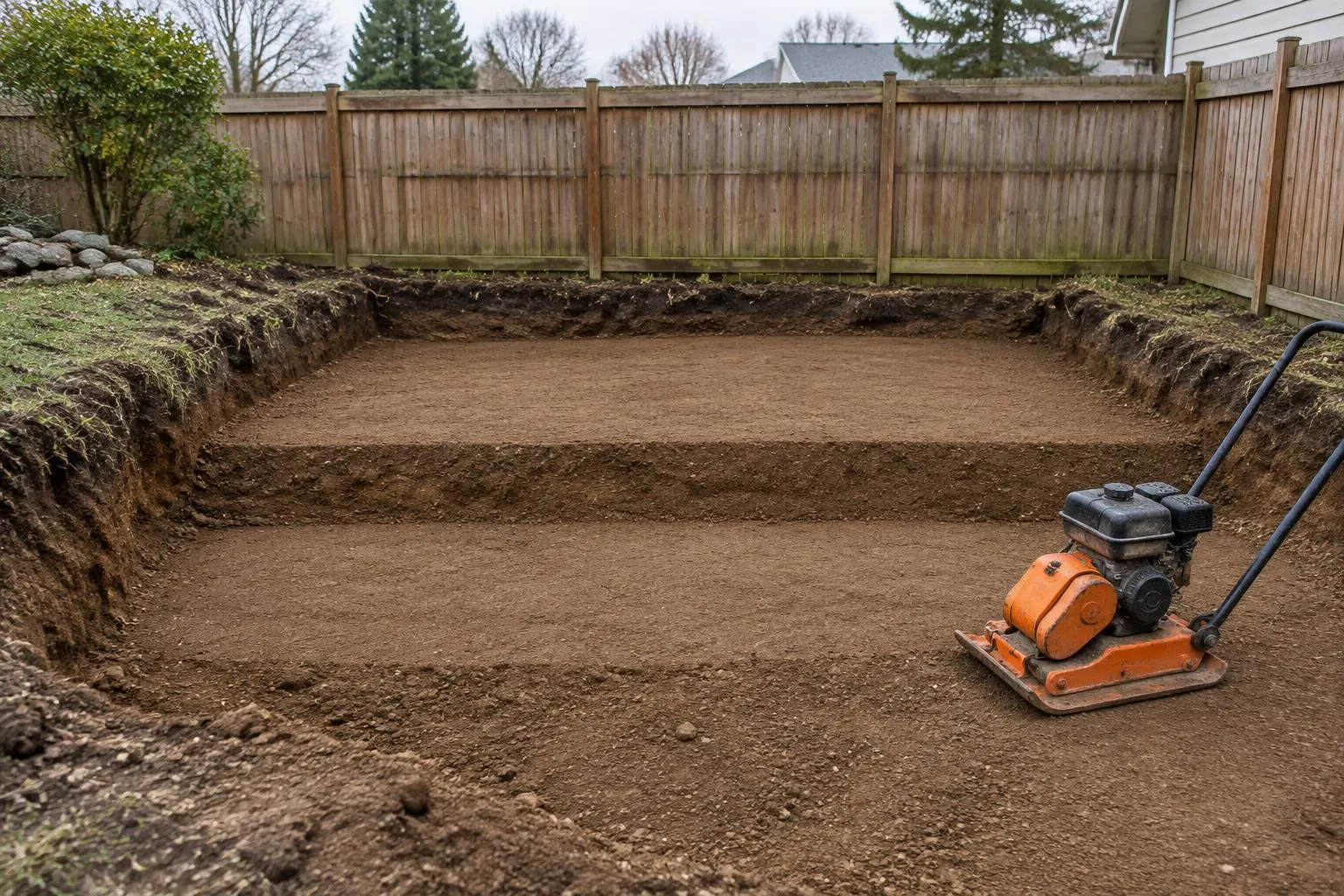
- Backfill in compacted lifts
- Topsoil and sod
Step 1 of 5 — Drain
Full removal
- Drain to your city's rules
- Disconnect equipment and utilities
- Remove the deck and coping
- Remove the entire shell and haul it away
- Backfill in compacted lifts under engineering supervision
- Topsoil, sod or a new landscape
Partial removal (fill-in)
- Drain to your city's rules
- Disconnect equipment and utilities
- Remove the deck and coping
- Cut the walls at least 18 in below grade and break drainage holes in the floor
- Backfill in compacted lifts
- Topsoil, sod or a new landscape
Partial-removal details follow a US county rule (Maricopa County, Arizona, Nov 2025), used as a process reference only.
Decision guide
Which method fits?
How to read this: Pick the answer that fits your yard; the matching option is highlighted. Every option stays listed.
Full removal. The whole shell comes out and the hole is backfilled under engineering supervision; abandoning a shell in place can bar building on the spot (US county rule used as a process reference).
Partial removal may suit. Walls cut at least 18 in below grade with drainage holes in the floor. Ask your realtor or lawyer about disclosure to future buyers.
Usually full removal. Vinyl and fibreglass pools generally come out completely; concrete is the type most often partly left.
No Ontario source
What drives the cost
- Pool type and size
- Access for equipment
- Deck and coping removal
- Fill volume and trucking
- Compaction testing and engineer
- Fence removal and final landscaping
US reference only (Angi, Oct 12, 2026): full removal US$4,000–$16,000; partial removal US$2,500–$10,000; 1–7 days. We found no credible Ontario price source. Your exact price comes from an on-site quote.
By-laws
Rules to know
- Hamilton draining: dechlorinate to ≤0.1 mg/L and drain onto your own lawn.
- Burlington draining: dechlorinate and drain across the lawn; salt water to the sanitary drain.
- Oakville draining: to the street curb and gutter, never onto neighbours.
- Oakville bans removing any part of the enclosure while the pool holds water. Keep the enclosure up until the pool is filled.
- Excavation and imported fill can trigger Hamilton's Site Alteration Permit (fill must come from within the city; excavated material to an approved site) and Oakville's Development Engineering Permit.
- No city page we found addresses removal directly, so confirm with your municipality.
- Disclosure to future buyers: talk to your realtor or lawyer.
Confirm current rules with your municipality before building.
Common questions answered
Straight answers
Pool removal & fill-in FAQ
What is the difference between full and partial pool removal?
Full removal takes the whole shell out and backfills the hole under engineering supervision to about 90% relative density. Partial removal cuts the walls at least 18 in below grade, breaks drainage holes in the floor at the deep and shallow ends and fills the rest. That partial-removal rule comes from Maricopa County, Arizona (Nov 2025), a US process reference only.
How much does pool removal cost in Ontario?
We found no credible Ontario price source for pool removal. The only dated reference is American: about US$4,000–$16,000 for full removal and US$2,500–$10,000 for partial removal, over 1–7 days (Angi, Oct 12, 2026). Treat it as a US reference only. Your exact price comes from an on-site quote that looks at size, access and fill.
Which removal method should I choose?
If you may build on that spot later, or plan to sell soon, full removal is the safer choice; abandoning a shell in place can bar building on the spot under the US county rule we used as a reference. If the area will only be lawn or garden, partial removal may suit. Ask your realtor or lawyer about disclosure to future buyers.
Can a vinyl or fibreglass pool be partly left in the ground?
Vinyl liner and fibreglass pools generally come out completely. Concrete is the type most often broken up and partly left in place. Whichever method you use, the steps are similar: drain to your city's rules, disconnect equipment and utilities, remove the deck and coping, remove or break out the shell, backfill in compacted lifts, then finish with topsoil and sod.
How do I drain my pool before removal?
Follow your city's rules. Hamilton: dechlorinate to 0.1 mg/L or less and drain slowly onto your own lawn, never to storm sewers, streets or ravines. Burlington: dechlorinate and drain across the lawn, with salt water to the sanitary drain. Oakville: direct pool water to the street curb and gutter, never onto neighbouring lots.
Can I take the pool fence down first?
No. Oakville bans removing any part of the pool enclosure while the pool holds water, and an empty shell arguably remains a regulated pool until it is broken out or filled. Keep the enclosure up until the pool is filled in, then remove the fence as part of the final landscaping, so the yard is never left with an open hole.
Do I need a permit to remove a pool?
No city page we found addresses pool removal directly, so confirm with your municipality. Excavation and imported fill can trigger Hamilton's Site Alteration Permit, where fill must come from within the city and excavated material must go to an approved site, and Oakville's Development Engineering Permit. Confirm current rules with your municipality before building.
What can go where the pool was?
Once the hole is backfilled in compacted lifts, the area is usually finished with topsoil and sod, garden beds, an interlock patio or a deck. If you plan a structure there later, full removal with engineered backfill is the method to discuss. We plan the removal and the new landscape as one project, with one point of contact.
Start with the yard
Tell us about your pool removal & fill-in project.
Share your city, timing and side-yard access. We'll arrange a free on-site consultation.