
 AntoineAsphalt.ca
Can a Fibreglass Pool Pop Out of the Ground?
Quick answer
Yes, if it is drained while groundwater is high. AQUA Magazine notes that a couple of inches of differential head can float a fibreglass shell. Risk peaks during snowmelt and storms. Builders typically set an 8 in groundwater pipe in the deep end, and a fibreglass pool should never be fully drained. Correct winter closing keeps water in the pool.
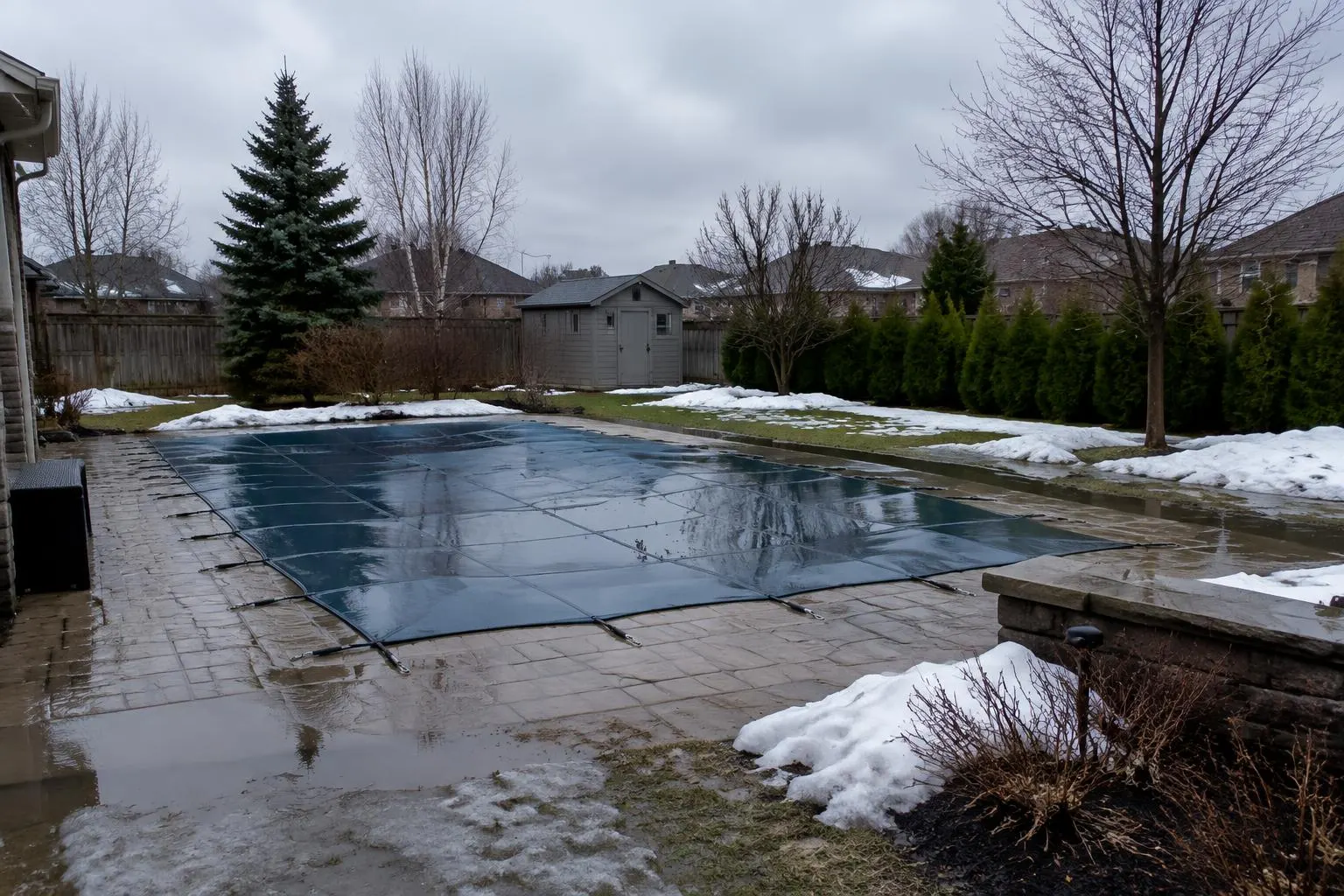
Why can a pool lift out of the ground?
Groundwater pushes up on the outside of a pool. When the water inside weighs less than that push, the pool can move. AQUA Magazine's "Pressure Points" puts numbers on it: a couple of inches of differential head can float a fibreglass shell, 18 in can lift a gunite pool, and a few inches can blister a vinyl liner.
When is the risk highest?
Danger peaks when a pool is drained while groundwater is rising, which in Ontario means spring snowmelt and heavy storms (AQUA Magazine).
What does the deep-end groundwater pipe do?
An 8 in (203 mm) groundwater pipe is typically set in the deep end of a fibreglass pool (Pool & Spa Marketing, Canadian trade, 2012). It lets a technician check and pump down groundwater before any water is lowered. A relief pipe or well point is the standard protection.
Can I drain my fibreglass pool?
Never fully. A fibreglass pool should only have water lowered with the groundwater checked first, and it should never be emptied completely. Get a pool professional to manage any repair that needs the water level down.
How should a pool be closed for winter?
Lower the water below the skimmer or tile line without draining, blow out the lines and add antifreeze, drain the equipment and fit a tight cover (Carson Dunlop, Sep 2024; Co-operators). Freeze damage from improper winter closing is generally excluded by insurers (BrokerLink, Jun 2026).
Is groundwater a bigger issue in lower Hamilton than on the Mountain?
Ground differs across Hamilton. The lower city sits on Lake Iroquois glaciolacustrine sand and clay; the Mountain is glacial till over Silurian dolostone and limestone. Ancaster lots may sit on Niagara Escarpment bedrock (Boulder Design, Feb 2026). Water behaves differently in each, so check groundwater on your own lot during design rather than assuming.
Groundwater and your pool
How groundwater affects a fibreglass pool
How to read this: A side view of a fibreglass pool in wet ground. Tap each tab to see what groundwater does when the pool is full, drained, or pumped down with a relief pipe.
Pool full
With the pool full, the weight of the water inside balances groundwater pushing up from below.
- Pool full: With the pool full, the weight of the water inside balances groundwater pushing up from below.
- Drained in spring: Drained while groundwater rises during snowmelt or storms, a couple of inches of differential head can float a fibreglass shell (AQUA Magazine, "Pressure Points").
- Relief pipe: An 8 in (203 mm) groundwater pipe set in the deep end lets water around the shell be pumped down (Pool & Spa Marketing, 2012). The rule stays the same: never drain a fibreglass pool fully.
Frequently asked questions
How much groundwater does it take to float a fibreglass pool?
Very little. AQUA Magazine's "Pressure Points" notes that a couple of inches of differential head can float a fibreglass shell. For comparison, about 18 in can lift a gunite pool and a few inches can blister a vinyl liner. The risk is highest when a pool is drained while groundwater rises.
Should I drain my fibreglass pool for winter?
No. A fibreglass pool should never be fully drained. Correct winter closing lowers the water below the skimmer or tile line, blows out the lines, adds antifreeze, drains the equipment and fits a tight cover (Carson Dunlop, Sep 2024; Co-operators). The water left inside helps hold the shell down against groundwater.
What is the pipe in the deep end of a fibreglass pool?
It is a groundwater relief pipe, typically 8 in (203 mm), set in the deep end during installation (Pool & Spa Marketing, Canadian trade, 2012). It lets a technician check the groundwater level and pump it down before the pool water is lowered. A well point does the same job on some sites.
When is a pool most likely to pop out in Ontario?
During spring snowmelt and heavy storms, when groundwater rises fastest. AQUA Magazine says the danger peaks when a pool is drained while groundwater is rising. Keeping water in the pool through those periods, and checking the relief pipe before any repair, is the main protection.
Does home insurance cover a pool damaged by a bad closing?
Generally not. BrokerLink notes that freeze damage from improper winter closing is generally excluded (Jun 2026). Inground pools usually fall under other structures, typically 10% of the dwelling limit. Tell your insurer before building and close the pool correctly each fall to avoid an uncovered repair.
Is groundwater worse in lower Hamilton?
Ground conditions differ. The lower city sits on Lake Iroquois sand and clay, while the Mountain is glacial till over dolostone and limestone (Boulder Design, Feb 2026). Groundwater behaves differently in each, so check your own lot during design. Depth to rock and water varies lot by lot.
Related guides & services
Planning a pool in Hamilton, Burlington, Oakville or Ancaster? See pool installation or ask for an on-site quote below.
General information. A pool professional should check groundwater before any water is lowered.
Ask about your project
Contact Antoine Landscape Contractors at (647) 459-7775 or share your project details below.