
 AntoineAsphalt.ca
Ontario's Pool Bonding Rules: What They Mean for Your Deck and Fence
Quick answer
Under ESA Bulletin 68-8-4 (May 2026), metal fences, piping, ladders and rebar within 1.5 m of the pool water must be bonded, and many decks need a No. 6 AWG copper grid. That means the paver base, deck pour and metal fence posts are sequenced around the electrician's bonding inspection. The Licensed Electrical Contractor and ESA decide the specifics for your pool.
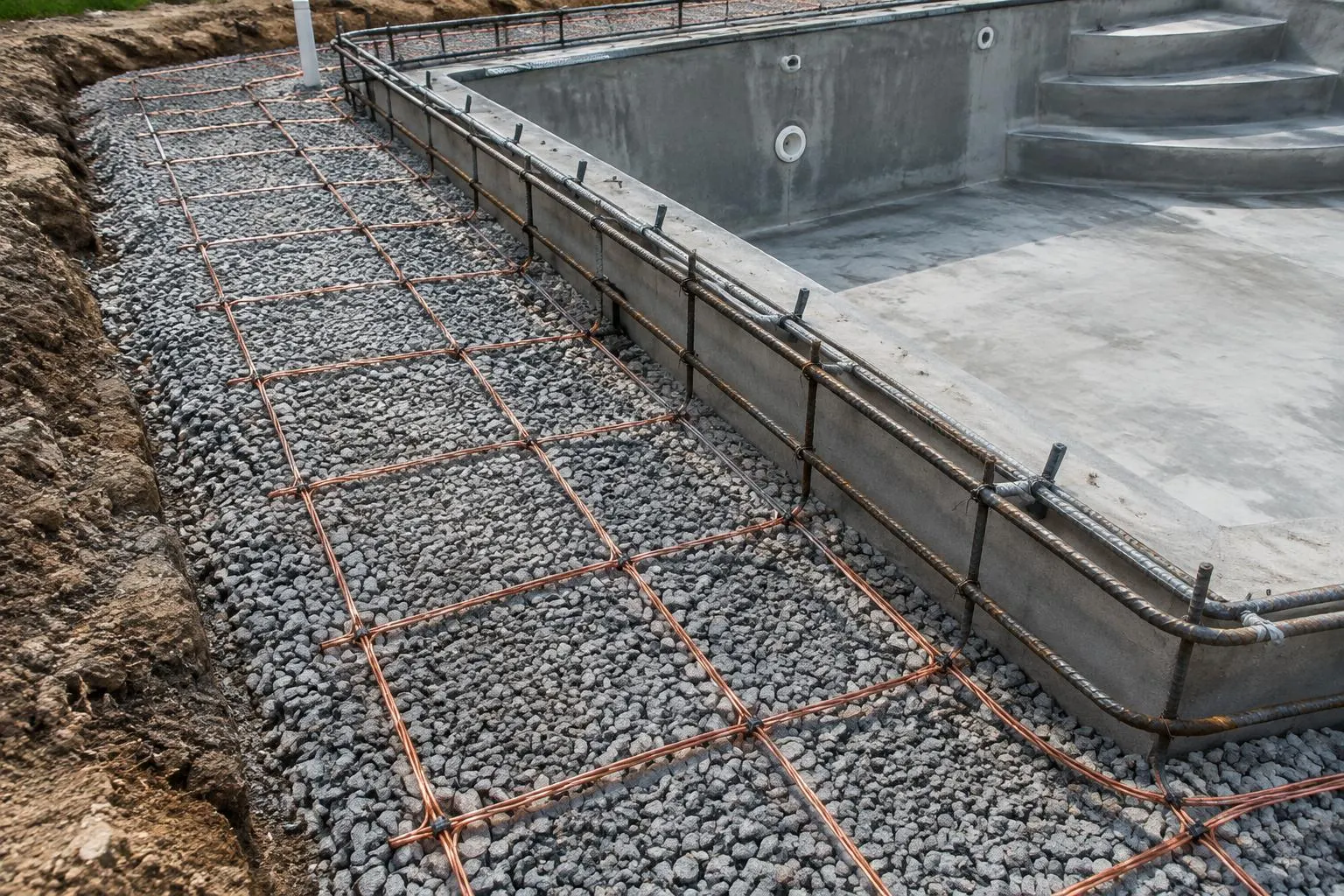
Which electrical rules apply to Ontario pools?
Pool electrical work is done by a Licensed Electrical Contractor (or a homeowner on their own home), with a notification of work filed with ESA before work starts (ESA, 2026). OESC Rule 68-058 applies to every notification filed on or after Oct 1, 2025. ESA says pool work "usually requires both a building permit and an electrical permit".
What has to be bonded within 1.5 m of the water?
ESA Bulletin 68-8-4 (May 2026) requires metal fences, piping, ladders and rebar within 1.5 m of the pool water to be bonded.
How is a pool deck bonded?
The deck rules depend on what the deck is made of (ESA Bulletin 68-8-4, May 2026):
- Decks with unencapsulated rebar: bonded at 4 or more points.
- Decks with encapsulated or fibreglass rebar: a bare No. 6 AWG copper grid at 300 mm mesh, extending 1 m from the shell, 100–150 mm below grade.
- Deck bonding can be skipped where non-conductive decking (wood or composite at least 13 mm) extends 1 m from the pool.
How is a hot tub bonded?
Permanently installed hot tubs need a copper ring 450–600 mm out from the unit (ESA Bulletin 68-8-4, May 2026).
How far must outlets and overhead lines be from a pool?
ESA's guidance summarizes the distances: receptacles 3 m from the pool, or 1.5 m with a Class A GFCI; overhead conductors 5 m horizontally from the pool edge, including decks and slides. Defer the specifics to the licensed electrician.
In what order does bonding happen during the build?
Because the grid sits under the deck and the fence posts may need bonding, the build follows this sequence:
- Dig
- Shell
- Bonding grid or ring
- Electrician's inspection
- Deck base and pour
- Metal fence posts
- Enclosure inspection
- Fill
The Licensed Electrical Contractor and ESA decide the specifics for your pool.
Bonding sequence and zones
Sequencing timeline
Order the pool bonding (electrical grounding) and inspections happen in
How to read this: Step through the numbered boxes left to right (top to bottom on a phone); each one must be done before the next.
Dig
Ontario One Call locate first, then excavation.
Shell
Fibreglass shell set, vinyl walls braced, or concrete shell sprayed.
Bonding grid or ring
The electrician bonds the shell, rebar and metal within 1.5 m; a No. 6 AWG copper grid at 300 mm where the deck needs one.
Electrician's inspection
ESA inspects the bonding before anything covers it.
Deck base and pour
Paver base or concrete deck goes in over the inspected grid.
Metal fence posts
Metal fence parts within 1.5 m of the water are bonded too.
Enclosure inspection
The city inspects the permanent pool fence.
Fill
Only after the enclosure passes.
- Step 1 of 8: Dig. Ontario One Call locate first, then excavation.
- Step 2 of 8: Shell. Fibreglass shell set, vinyl walls braced, or concrete shell sprayed.
- Step 3 of 8: Bonding grid or ring. The electrician bonds the shell, rebar and metal within 1.5 m; a No. 6 AWG copper grid at 300 mm where the deck needs one.
- Step 4 of 8: Electrician's inspection. ESA inspects the bonding before anything covers it.
- Step 5 of 8: Deck base and pour. Paver base or concrete deck goes in over the inspected grid.
- Step 6 of 8: Metal fence posts. Metal fence parts within 1.5 m of the water are bonded too.
- Step 7 of 8: Enclosure inspection. The city inspects the permanent pool fence.
- Step 8 of 8: Fill. Only after the enclosure passes.
Step 1 of 8 — Dig
Bonding zones
The pool's bonding zone (grounding safety ring)
How to read this: A bird's-eye view of a pool. Metal inside the dashed outer line, 1.5 m from the water, must be bonded. The numbers match the list under the drawing.
- 1.5 m (5 ft) zone: connect nearby metal to the bonding wire
- 1 m (3.3 ft) deck grid zone
- Pool water
- Metal fence post
- Ladder
- Rebar
- Anything metal within 1.5 m (5 ft) of the water — fence posts, ladders, rebar, pipes — gets connected to the bonding wire.
- Concrete or paver decks get a copper grid underneath; a wood or composite deck may not need one.
- A licensed electrician does this and ESA inspects it before the deck goes down.
The Licensed Electrical Contractor and ESA decide the specifics for your pool.
Frequently asked questions
Does a metal pool fence need to be bonded in Ontario?
Yes, if any metal part is within 1.5 m of the pool water. ESA Bulletin 68-8-4 (May 2026) requires metal fences, piping, ladders and rebar within that distance to be bonded. That is why metal fence posts near the pool are set after the electrician's bonding work. The Licensed Electrical Contractor and ESA decide the specifics.
Does an interlock pool deck need a bonding grid?
Often. Under ESA Bulletin 68-8-4 (May 2026), decks with encapsulated or fibreglass rebar need a bare No. 6 AWG copper grid at 300 mm mesh, extending 1 m from the shell and 100–150 mm below grade. The grid is inspected before the paver base or pour covers it. Your electrician confirms what your deck needs.
Can a wood or composite deck skip pool bonding?
Deck bonding can be skipped where non-conductive decking, such as wood or composite at least 13 mm thick, extends 1 m from the pool (ESA Bulletin 68-8-4, May 2026). Metal within 1.5 m of the water, such as railings or fence posts, still needs bonding. The Licensed Electrical Contractor and ESA decide the specifics.
How far must an outlet be from a pool in Ontario?
ESA guidance puts receptacles at least 3 m from the pool, or 1.5 m when protected by a Class A GFCI. Overhead conductors must be 5 m horizontally from the pool edge, including decks and slides. These are summaries; the Licensed Electrical Contractor applies the Ontario Electrical Safety Code to your yard.
What is OESC Rule 68-058?
It is the Ontario Electrical Safety Code rule for pool bonding, and it applies to every notification of work filed with ESA on or after October 1, 2025. ESA Bulletin 68-8-4 (May 2026) explains how it applies to fences, decks, rebar and hot tubs. The Licensed Electrical Contractor files the notification before work starts.
Does a hot tub need bonding?
A permanently installed hot tub needs a copper bonding ring 450–600 mm out from the unit (ESA Bulletin 68-8-4, May 2026). That ring goes in before the pad or deck around the tub is finished. Electrical work is done by a Licensed Electrical Contractor with a notification filed with ESA, and ESA decides the specifics.
Related guides & services
Planning a pool in Hamilton, Burlington, Oakville or Ancaster? See pool installation or ask for an on-site quote below.
General information, not electrical advice. The Licensed Electrical Contractor and ESA decide the specifics for your pool.
Ask about your project
Contact Antoine Landscape Contractors at (647) 459-7775 or share your project details below.