
 AntoineAsphalt.ca
Interlock repair guide
Why Do Interlock Pavers Sink? Causes and Fixes
Interlock pavers usually sink because the base underneath was too thin, poorly compacted or washed out by water. Missing edge restraint, tree roots, utility cuts and freeze–thaw on wet clay also move pavers. Most cases are fixed by lifting the pavers, correcting the base and relaying them; repair pricing is quoted on site.
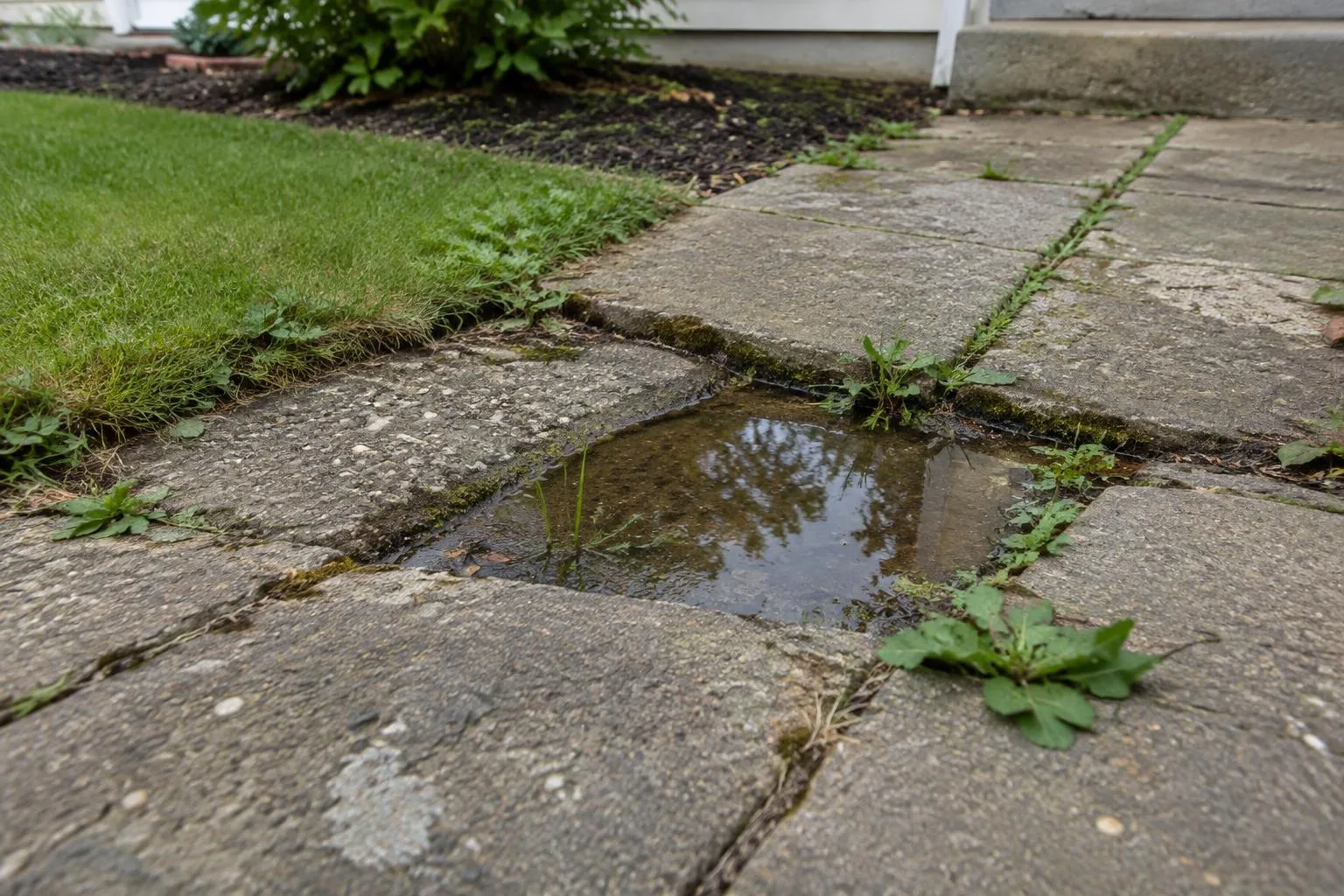
Interlock pavers usually sink because the base underneath was too thin, poorly compacted or washed out by water. Missing edge restraint, tree roots, utility cuts and freeze–thaw on wet clay also move pavers. Most cases are fixed by lifting the pavers, correcting the base and relaying them; repair pricing is quoted on site.
Key takeaways
- Sinking is almost always a base or water problem, not a paver problem.
- Early signs — puddles, rocking pavers, spreading joints — are cheaper to fix than a large failed area.
- Lift-and-relay repairs reuse sound pavers and rebuild the base underneath.
- Prevention comes down to base depth, compaction in lifts, edge restraint and controlling water.
Why do pavers sink in the first place?
An interlock surface is only as stable as what is underneath it. The pavers themselves are strong; they sit on a thin bedding layer, which sits on a compacted granular base, which sits on native soil. If any of those layers moves, the pavers above follow. When homeowners call us about a sinking driveway or patio, the cause is almost always in those lower layers rather than the stone on top.
Think of the base as a load-spreading platform. A well-built base spreads the weight of a car or a patio table over a wide area of soil. A thin or loose base concentrates that weight, and over time the soil beneath compresses in those spots, leaving ruts, dips and low corners.
What are the most common causes?
Each cause leaves a slightly different pattern, which helps us diagnose it before we dig.
- Inadequate or poorly compacted base: dips follow tire tracks or high-traffic paths
- Washouts from downspouts or poor grading: low spots near discharge points or where water collects
- Missing or failed edge restraint: outer rows spread outward and joints open along the edge
- Tree roots: localized heaving near trees, sometimes with cracked or tilted pavers
- Utility cuts: a rectangle that settles after a trench was backfilled without proper compaction
- Freeze–thaw on wet clay: seasonal heaving and settling where water sits in clay soils
How does freeze–thaw move pavers?
When water sits in or under the base and freezes, it expands and pushes the surface up. When it thaws, the soil is soft and the surface drops back — often not to where it started. Repeat that over many winters and you get a wavy, uneven surface. Clay soils, which are common in parts of Hamilton, hold water longer and are more prone to this.
Toggle the freeze–thaw demo in the cutaway below to see how a shallow, wet base heaves compared with a properly prepared one. Switch between driveway and patio modes to see the difference in typical base depth.
What are the warning signs?
Catching movement early keeps the repair smaller. Walk the surface after a rain and look for these:
- Low spots or puddles that stay after the rest of the surface dries
- Edges that stick up enough to catch a toe or a shovel
- Joints spreading wider or sand washing out
- Weeds and ants moving into open joints
- Pavers that rock or click underfoot
- Water running toward the foundation instead of away from it
- Outer rows drifting outward where the edge restraint has failed
How is sinking interlock fixed?
The standard repair is lift-and-relay. We remove and stack the pavers in the affected area, dig out the failed bedding and base, correct the cause — adding and compacting base in lifts, fixing drainage or cutting back a root where appropriate — then re-screed the bedding and relay the original pavers where they are sound. Damaged pavers are replaced with the closest available match. We add or replace edge restraint, refill the joints with polymeric sand and compact the surface.
The illustration below compares a sunken, uneven section with the same area after relevelling. It is a diagram, not a photo of a specific project. Details of the repair process, and a guide to deciding between repair, partial rebuild and full replacement, are on our interlock repair and relevelling page.
When is repair better than replacement?
Repair makes sense when the problem is localized, the pavers are in good condition and a matching supply is available. A partial rebuild suits a larger failed area where the rest of the surface is sound. Full replacement becomes the better value when the base has failed across most of the surface, the pavers are worn or discontinued, or you want to change the layout or size anyway. We confirm which applies on site, and repair pricing is quoted after we see it.
How do you prevent pavers from sinking?
Prevention is mostly about decisions made during installation. Excavate deep enough for the use: vehicle areas typically need 8–12 in of compacted base and pedestrian areas typically 6–8 in, adjusted for soil. Compact the base in lifts rather than in one thick layer. Use geotextile where the soil calls for it. Install a solid edge restraint around the perimeter. Slope the surface away from the house and send downspouts somewhere they will not undermine the base.
After installation, keep joints full, deal with weeds early and watch for new low spots. A small dip fixed in its first season is a much easier job than a large area that has been moving for years.
Can I fix a sunken paver myself?
For a single rocking paver on a patio, a careful homeowner can sometimes lift it, add and level bedding sand and reset it. That treats the symptom, though. If the low spot is part of a larger pattern, or keeps coming back, the base underneath has a problem that surface fixes will not solve. Driveways, areas near foundations and anything involving drainage are best assessed by a contractor.
Why does clay soil make sinking more likely?
Parts of Hamilton and Halton sit on clay-rich soils. Clay holds water, drains slowly and swells when it freezes, so a paved area built directly on it, or on a thin base above it, is more exposed to movement. The fix is not exotic: excavate to firm subgrade, separate the soil from the base with geotextile where appropriate, build the base in compacted lifts and give water a clear path away.
On very wet sites, an underdrain or a connection to an appropriate outlet may be worth considering. That is a site-specific decision we make after looking at the grades, the downspouts and where water currently goes during a storm.
How do downspouts and grading cause washouts?
A downspout that discharges straight onto or beside pavers concentrates a large volume of roof water in one spot. Over time that water carries fine material out of the bedding and base, and a low area appears near the corner of the house. Redirecting the downspout, adding a splash pad or extending it past the paved edge is often part of a lasting repair.
Overall slope matters as much. Interlock should shed water away from the foundation and toward a safe outlet. If the surface was laid flat or tilted toward the house, relevelling is a chance to correct the grade rather than simply rebuild the same problem.
What should I check each spring?
After the snow melts, walk the paved areas slowly and look for new low spots, puddles that linger after rain, joints that have opened up and edges that have spread. Check where downspouts discharge and whether water is flowing toward the house. Catching a small dip early usually means a smaller lift-and-relay later, and it gives you a chance to fix drainage before the next winter.
Frequently asked questions
Why is my interlock driveway sinking in the tire tracks?
Ruts that follow tire paths usually point to a base that was too thin or poorly compacted for vehicle loads.
Can sunken pavers be reused?
Often yes. Sound pavers are lifted, stacked and relaid after the base is corrected; damaged ones are replaced with the closest available match.
Will polymeric sand stop pavers from sinking?
No. Polymeric sand stabilizes joints and discourages weeds, but it cannot fix a failed base underneath.
Do downspouts cause pavers to sink?
They can. Concentrated water from a downspout can wash out bedding and base material, leaving a low spot near the discharge point.
How much does interlock repair cost?
Repair and relevelling are quoted on site because the size of the area, the base condition and paver availability vary widely.
Is heaving the same as sinking?
They are related. Heaving is usually frost or roots pushing up; sinking is the base or soil compressing. Both point to what is happening below the surface.
Can sealing fix uneven pavers?
No. Sealing protects and refreshes the surface, but uneven areas need to be relevelled first.
When is the best time to repair?
Repairs are done in the frost-free season. It helps to note problem spots in spring, when heaving and puddles are easiest to see.
Related interlock information
From guide to site plan
Get an on-site interlock quote
Call (647) 459-7775 or send the essentials. Your exact price comes from an on-site quote.