
Book Your Free Hardscape Design Consultation Today! · Call (647) 459-7775
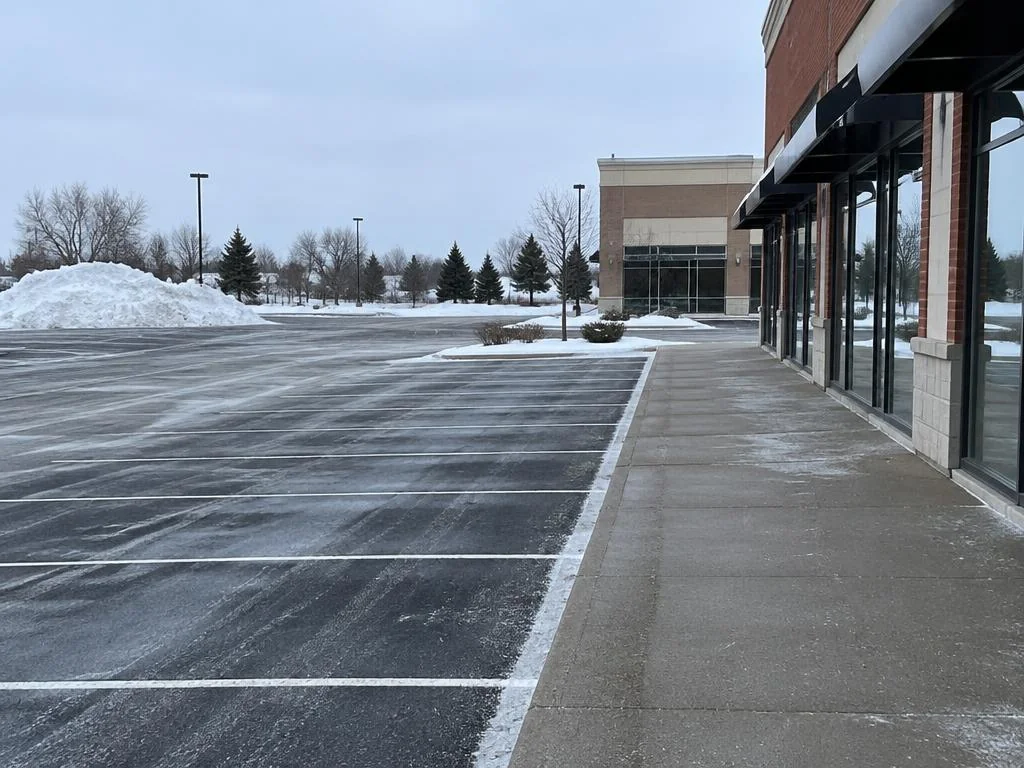
Commercial parking lot with cleared drive aisles and snow stored along the perimeter

Commercial Snow & Ice Management

Lot plowing, sidewalk crews and salt & ice control for commercial, multi-residential and institutional sites in Hamilton, Burlington and Oakville. Planned before the first storm, written into the contract, and done to the you choose.

Certificate of insurance and WSIB clearance on request

At a glance

  • Services: Lot plowing · Sidewalk crews · Salt & ice control
  • Areas: Hamilton, Ancaster, Burlington, Oakville
  • Contract: A written level of service, agreed before winter
  • Not included: Hauling snow off site

What we do

Lot plowing

  • Drive aisles, parking stalls, fire routes and loading areas
  • Plowing starts at the in your contract
  • Piles go to agreed storage areas, away from drains, hydrants and sightlines
  • Never pushed onto the road

Sidewalk crews

  • Entrances, walkways, steps and curb ramps
  • Accessible routes and accessible parking first
  • Hand crews for the spots a plow can't reach
  • City sidewalks along your frontage, where the by-law makes you responsible

Salt & ice control

  • Salting based on conditions, not just snow depth
  • Pre-treatment ahead of forecast ice, where it suits the site
  • Return visits for melt and refreeze, as set in your contract
  • Rates matched to pavement temperature, with less salt near plantings and doorways

Also need summer grounds care? See commercial landscape maintenance →

Hamilton winters, by the numbers

How much snow falls each month (Hamilton Airport)

11.0 cmNov33.5 cmDec40.8 cmJan35.1 cmFeb26.5 cmMar8.4 cmApr
Most snow falls December through February — that's when plowing needs are highest.
Hamilton Airport average monthly snowfall, cm (inches)
MonthSnowfall (cm)Snowfall (inches)
Nov11.04.3
Dec33.513.2
Jan40.816.1
Feb35.113.8
Mar26.510.4
Apr8.43.3

Source: Environment and Climate Change Canada climate normals, 1981–2010.

≈156 cm (≈61 in.)

snow in an average year at Hamilton Airport

≈118 cm (≈46 in.)

at the lakeside Royal Botanical Gardens station. Snowfall changes across the area, so plans should fit the site.

≈54 days

a year with measurable snowfall

≈66 days

a year that freeze and thaw (City of Hamilton climate report, 1976–2005 baseline)

In Hamilton, refreeze (ice forming overnight) is the hazard to plan for. Meltwater from piles, roofs and shaded walks freezes overnight. That's why the plan covers where piles go and when walks get rechecked.

How a storm is handled

Every storm runs through the same five stages. Pick a storm type to see what changes.

  1. 1Fall

    Before winter

    Site walk. We agree priority areas, storage areas, trigger depths and what goes in the record. Curbs and edges are staked so they can be found under snow.

  2. 2Up to 2–3 days ahead

    Before the storm

    Forecast watch. Where the site and forecast suit it, walks and entrances are pre-treated so ice can't bond. works best shortly before precipitation starts.

  3. 3While it falls

    During the storm

    Plowing starts when snow reaches your trigger depth. Entrances, walks, ramps and accessible stalls are kept open first.

  4. 4Within 24 hours

    After the storm

    Clean-up plowing to open every stall, final salting, and piles pushed back from drains and sightlines. In Hamilton, City sidewalks next to your property must be cleared within 24 hours after the snow stops.

  5. 5After each event

    The record

    What was done, when, and what was applied, written down for each event.

    See what a good record includes ↓

Times show planning stages, not promised arrival times. Visits follow your written contract.

Your site's snow plan

A good snow plan is a drawing, not a promise. It shows what's cleared first, where piles go, and where snow never goes.

BUILDINGPUBLIC ROADCity sidewalkFIRE ROUTElot drains this way1112233
Sample site for illustration. Your plan is drawn for your property.

What gets cleared first

The plan sets the order, so the parts of the site people need most open first.

  • 1Open first: entrances, the front walk, curb ramps, accessible stalls and the fire route.
  • 2Then the drive aisles and the driveway, so cars and emergency vehicles can move.
  • 3Then parking stalls: cleared as the storm allows, and fully after it ends.

Build your snow spec

Snow & ice spec — Retail plaza

Level of service: substantially clear of hazards. Service start: open by 7 a.m. Days: Weekdays Trigger depth (plowing starts): 5 cm Keep up during long storms: Yes Walk trigger (walk clearing starts): Any accumulation City sidewalk along frontage: Not sure Ice control: based on conditions Pre-treat before forecast ice where it suits the site: Yes Low-salt areas: None selected Priorities, in order: Main entrances → Accessible parking & routes → Fire routes & hydrants → Ramps & steps → Loading docks → Drive aisles → Perimeter parking Snow storage: Help us plan storage Records wanted: Arrival and departure times; Areas serviced; Material type and amount; Weather and pavement conditions; Areas left untreated, and why; A season salt summary Contract preference (to discuss): Not sure Term: One season

https://antoinelandscape.ca/commercial/snow-ice-management
(647) 459-7775

Industry procurement standards say a contract shouldn't promise more than 'substantially clear of hazards'. No one can promise bare, ice-free pavement during a storm. SIMA procurement standard (PDF) ↗

This is your spec, not a price. We confirm it on a site walk.

Salt works — until it doesn't

Pavement temperature, not air temperature, decides how well salt works.

−5 °C
−25 °C0 °C

−12 to −7 °C: Practical limit for rock salt
Tick at −9 °C: Hamilton's average January low (air temperature)

0 to −6 °C

Salt works well

At −1 °C, one kilogram of dry salt melts about 46 kg of ice in 5 minutes.

−7 to −12 °C

Salt slows down

At −9 °C, the same salt melts about 6 kg of ice, and it takes about an hour. Sources put rock salt's practical limit between −7 °C and −12 °C.

−13 to −20 °C

Change tactics

Plain rock salt barely works here. The usual options are pre-wetted salt, blended products, sand for traction, and clearing by hand or machine.

−21 °C and colder

Salt stops working

Below about −21 °C, dry salt won't melt ice at all.

Choosing a contract type

Snow contracts are priced a few different ways. Each one shifts risk between you and the contractor. Here's how they compare.

Average: about 156 cm, Hamilton Airport normal

Seasonal (fixed price)

How it's billed

One price for the season, often in monthly payments.

Budget certainty: High
Rewards using less salt: High
Your cost this winterIllustration only

Watch for: You pay the same in a light winter. Check how many events are included.

Seasonal with a cap

How it's billed

Fixed price up to a set number of events or centimetres, then per event.

Budget certainty: Medium-high
Rewards using less salt: High
Your cost this winterIllustration only

Watch for: Know exactly where the cap sits and what extra events cost.

Per event

How it's billed

A set price per storm, often in depth bands.

Budget certainty: Medium
Rewards using less salt: Medium
Your cost this winterIllustration only

Watch for: How a long, multi-day storm is counted.

Per push / per visit

How it's billed

Billed each time the crew services the site.

Budget certainty: Low
Rewards using less salt: Medium
Your cost this winterIllustration only

Watch for: More visits mean higher bills. Agree what counts as a push.

Hourly / time & materials

How it's billed

Hours and material billed as used.

Budget certainty: Low
Rewards using less salt: Low
Your cost this winterIllustration only

Watch for: Paying by the bag or tonne can encourage using more salt than needed.

Based on Ontario procurement guidance from the Toronto and Region Conservation Authority and industry sources. Ask us which structure fits your site.

Read the snow contract guide →

The 60-day notice: what owners should know

  • Since January 29, 2021, someone hurt by snow or ice on private property generally has to give written notice within 60 days before suing the occupier or its snow contractor.

  • The notice must state the date, time and location. It's served in person or by registered mail.

  • If you receive one, the law says to pass copies to your snow contractor and any other occupier. Do it the same day.

  • There are exceptions, such as when the person dies or a judge finds a reasonable excuse. The usual two-year limitation period still applies.

  • It's a notice rule, not immunity. What protects you is a clear record of what was done and when.

Read the full guide →

General information, not legal advice.

What a good service record shows

Your contract should say what record you get after each event. Ask any contractor, including us, for a sample before you sign.

SAMPLE RECORD

Sample — field list only
Site
Your property
Event
e.g. snow, about 8 cm
3Arrival / departure
e.g. 4:40 a.m. / 6:15 a.m.
Areas serviced
by zone, in priority order
Material and amount
type and quantity
2Conditions
weather, air and pavement temperature
1Areas left untreated, and why
e.g. blocked by parked vehicle
Return visits
refreeze checks

Sites we plan for

Retail plazas

Entrances and fire routes open before stores do.

Offices & industrial

Shift changes, loading docks and truck routes.

Multi-residential & condos

Walks, ramps and visitor parking, every day of the week.

Rules to know

60-day notice

Snow and ice injury claims against an occupier or its contractor generally need written notice within 60 days.

Read the guide →

Hamilton sidewalks

Owners and occupants must clear City sidewalks next to their property, including corner ramps, within 24 hours after snow stops falling (By-law 03-296). Otherwise the City can clear them and bill the owner.

Burlington & Oakville sidewalks

The City of Burlington and the Town of Oakville clear public sidewalks themselves. Check any site-specific rules before winter.

No snow on the road

Ontario's Highway Traffic Act (s.181) bans depositing snow or ice on a roadway without written permission.

Accessible routes

Ontario's accessibility standards require many organizations to plan maintenance of accessible outdoor elements, such as exterior paths and accessible parking. A snow plan can put these first, in writing.

Salt and water

Chloride from salt harms streams and drinking-water sources. Canada's long-term water quality guideline for chloride is 120 mg/L. The federal road-salt code covers public roads, not private lots, but its practices are a good standard.

Short summaries for planning. Check them against the current rules, your municipality’s conditions and your design professional. General information, not legal advice.

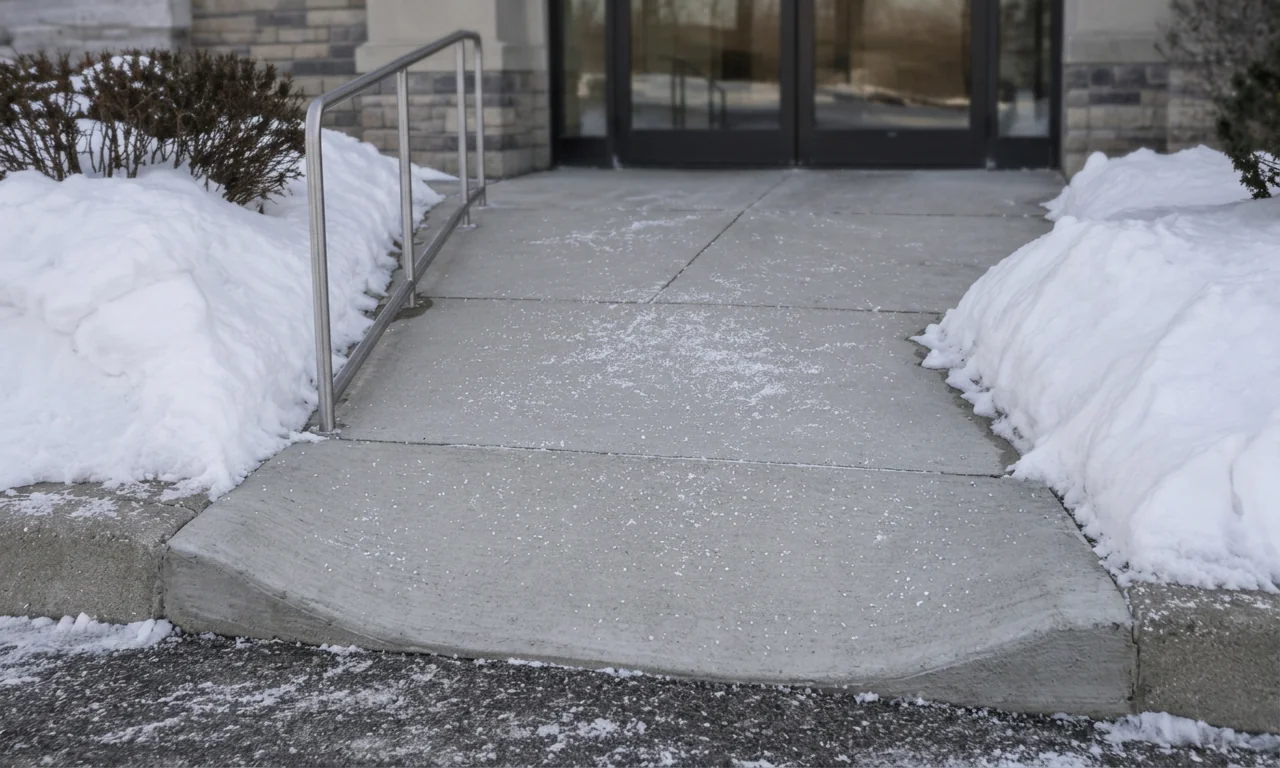
Cleared concrete entrance walk and curb ramp with light salt, snowbanks on both sides

Common questions

When should we sign a snow contract?

Ideally before fall. SIMA's procurement standard suggests issuing requests for proposals by May and awarding by September 1, so contractors can plan routes and crews. If you're past that, ask anyway. We'll tell you honestly whether we can take your site.

Read the snow contract guide →

What's a trigger depth?

The snow depth at which plowing starts, written into the contract. Ontario public specs we reviewed use 2 to 5 cm. Ice is different: salting should start when surfaces ice up, not at a depth.

Do you haul snow off site?

No. We plow to planned storage areas on the property. If a site has no room to store snow, we'll tell you before winter so you can arrange hauling.

Can you guarantee bare pavement?

No one can during a storm. Industry standards describe the goal as 'substantially clear of hazards'. Your contract sets triggers, priorities and return visits so the site gets there and stays there.

How do you keep salt use down?

By plowing well first, salting to conditions and pavement temperature instead of a fixed schedule, and using less near plantings and doors. Less salt also means less damage to concrete, pavers, plants and floors.

Do you clear City sidewalks?

Where the by-law makes you responsible, we can add them to your scope. In Hamilton, that's within 24 hours after the snow stops.

What should we do if we receive a 60-day notice?

Send copies to your snow contractor and any other occupier the same day, pull the records for that date, tell your insurer and get legal advice. See the checklist above. This is general information, not legal advice.

Which areas do you cover?

Hamilton (including Ancaster, Dundas, Stoney Creek and Waterdown), Burlington and Oakville.

Request a winter proposal

Tell us about the site. We'll walk it, agree the plan, and send a written proposal.

What happens next

  1. We review your property details.
  2. We walk the site and confirm the scope.
  3. You get a written scope and price.
Add project details (optional)
Services
Pricing comes from a site walk and a written scope. Prefer to talk? (647) 459-7775.