
 AntoineAsphalt.ca
Ontario Excess Soil Rules for Small Commercial Sites (O. Reg. 406/19)
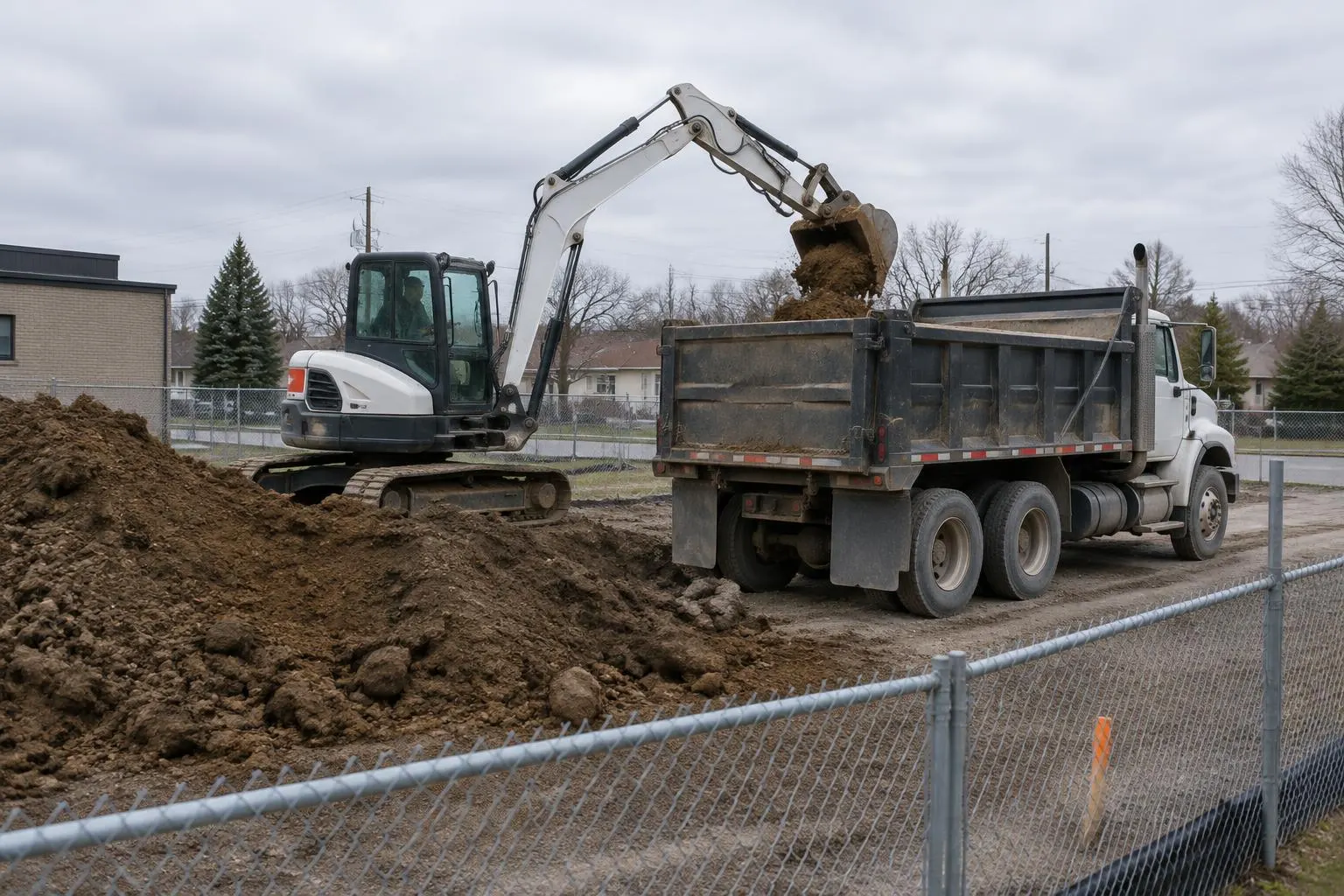
- The The person with the main excess-soil duties: usually the owner or developer. — usually the owner or developer — has the main duties (O. Reg. 406/19).
- Sites removing less than 2,000 m³ often skip the reuse-planning steps.
- 100 m³ or less taken straight to a waste disposal site has its own exemption.
- Keep hauling records for 2 years; keep most other documents for 7 years.
This page is for general planning only. It is not legal or engineering advice. Check current rules with the regulation, your municipality and your consultants.
Who the project leader is
The project leader has the main excess-soil duties; check reuse-planning and disposal exemptions and keep hauling records. On most commercial sites, that is the owner or developer. It is not usually the trade contractor doing the digging.
Contractors and haulers still move soil and keep records. Agree on the soil plan before excavation starts.
The 2,000 m³ threshold
Reuse-planning requirements, such as filing a notice and sampling, often don't apply to sites removing less than 2,000 m³ of Soil dug up on a project that has to leave the site.. That makes many small commercial and landscape projects simpler.
It is not an absolute rule. Small sites can still need planning if part of the site was a gas station, garage, dry cleaner or industrial use. Treat 2,000 m³ as a first check and confirm with your consultant.
The 100 m³ direct-to-waste-disposal exemption
There is a specific exemption for 100 m³ or less taken straight to a waste disposal site. Document the movement and confirm the destination.
Records to keep
Hauling records matter even when reuse planning does not apply.
Keep hauling records for two years after the soil is loaded. Keep most other documents made under the regulation for seven years.
- Where soil came from and where it went
- Dates and loads hauled
- Hauler and receiving-site details
- Any notices, sampling or planning documents prepared for the project
Estimating volumes
Volumes in the regulation refer to the soil being removed. Excavated soil also bulks up once dug, so truck counts are based on a larger loose volume. Use the estimate below for planning only; your engineer's quantities govern.
Planning before excavation starts
Before digging, name the project leader. Estimate the soil leaving site. Agree on its destination and who keeps records.
Frequently asked questions
Does a small landscape job need an excess soil notice?
Often not. Reuse-planning requirements such as filing a notice often don't apply to sites removing less than 2,000 m³, but this depends on the project. Confirm with the regulation and your consultants.
Who is responsible for excess soil?
Usually the owner or developer. Ontario calls them the 'project leader' (O. Reg. 406/19).
Does topsoil count as excess soil?
It can. Soil and topsoil removed from a project can be excess soil; confirm how your material is classified.
What records should we keep?
Hauling records, plus any documents made under the regulation. Keep hauling records for two years after the soil is loaded. Keep most other documents made under the regulation for seven years.
Related
Request a bid
Send drawings, site details and a tender reference if you have one. Or call (647) 459-7775.