
Best for
- Natural and cottage-inspired landscapes
- Homes where warm grain is part of the design
- Coordinated cedar privacy screens and planters
- Owners comfortable choosing between a maintained colour and silver-grey patina
Planting & finishing
Design & Build
One plan for the whole yard, from the first layout to the finished build.
Go to Design & BuildPool Installation
Fibreglass, vinyl liner and concrete pools, with the patio, fence and landscaping around them.
Pool Installation overviewFire Features
Gas fire pits, wood fire pits and outdoor fireplaces, planned around your city's burn rules.
Fire Features overviewWater Features
Ponds, pondless waterfalls and fountains, with the depth, power and winter care planned first.
Water Features overviewRetaining Walls
Armour stone, interlocking block and natural stone walls, built to hold the grade.
Retaining Walls overviewPrepare the site
 AntoineAsphalt.ca
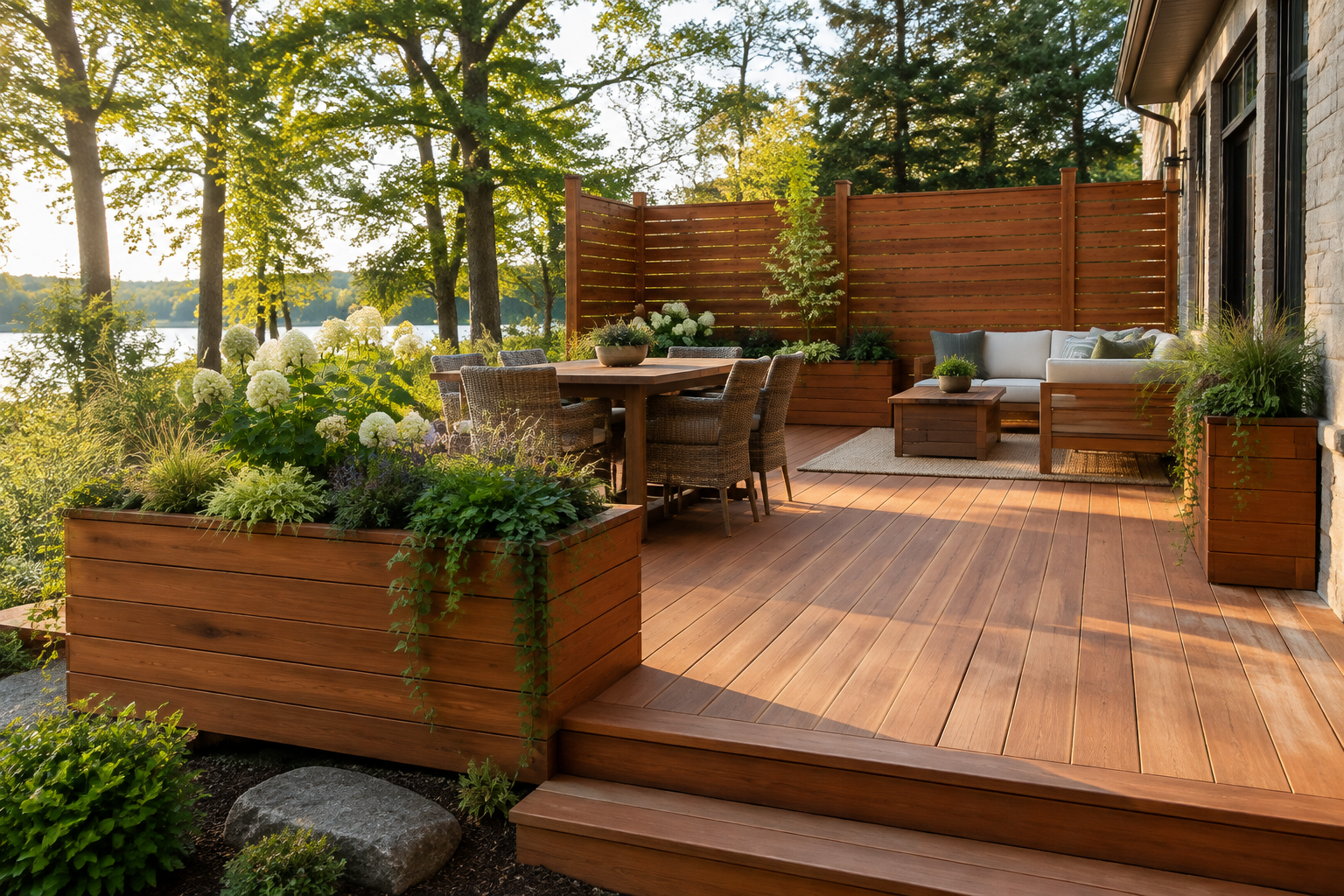
Decks · Cedar · Hamilton
Western Red Cedar brings warm colour, natural rot and insect resistance, and a lighter, more stable board than pressure-treated lumber. Typical Ontario installed ranges (2026) are $55–$80 per sq ft, with an approximate 15–25 year lifespan when properly installed and maintained.
Shown: Ground-level deck — Step 1 of 5 — Footings
Western Red Cedar brings warm colour, natural rot and insect resistance, and a lighter, more stable board than pressure-treated lumber. Typical Ontario installed ranges (2026) are $55–$80 per sq ft, with an approximate 15–25 year lifespan when properly installed and maintained. Your exact price comes from an on-site quote.
Fit before finish
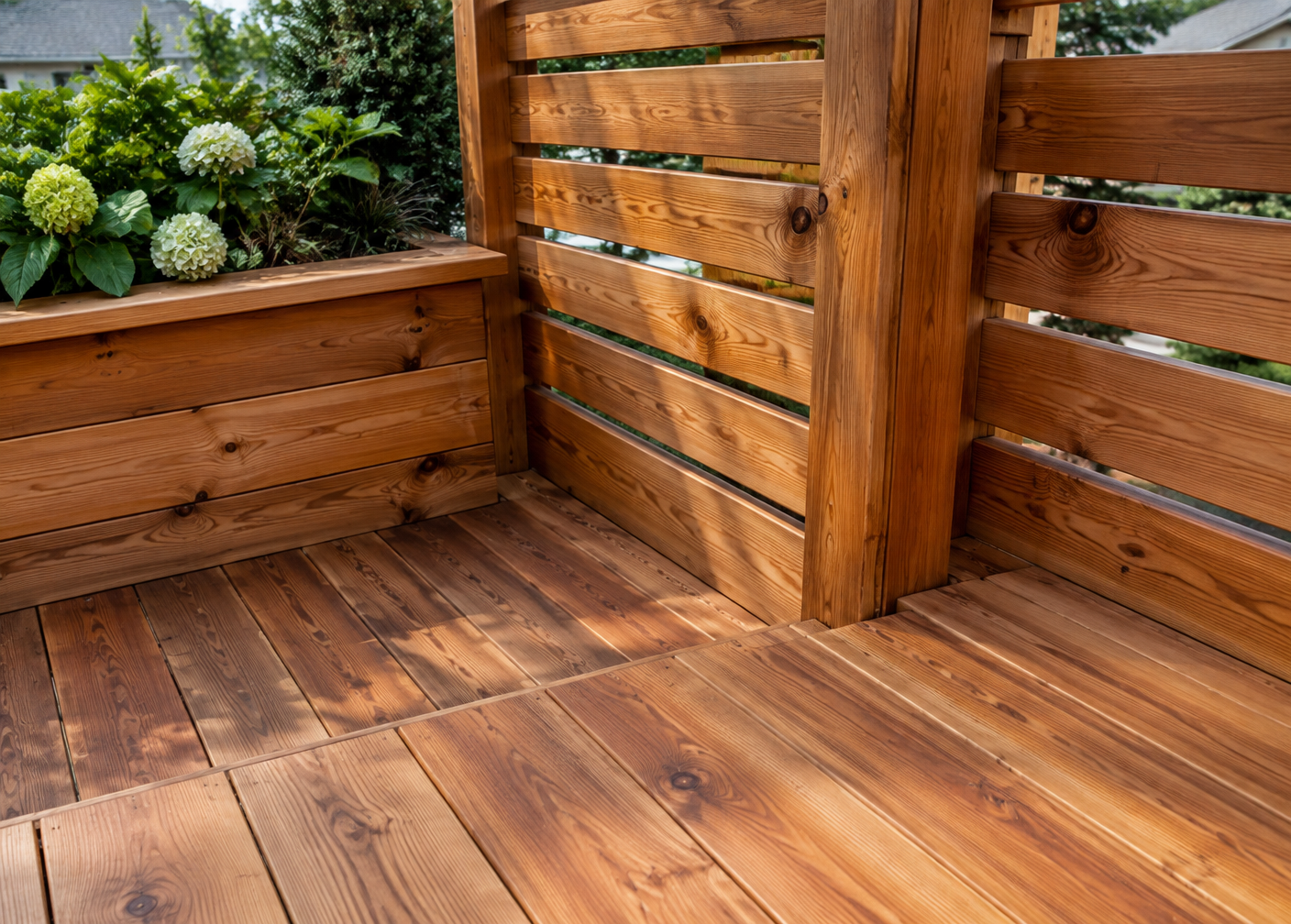
Profiles & details
Straight runs make the grain and warm colour the visual focus.
Matching slats shelter dining or hot-tub zones without mixing materials.
Cedar edges can frame planting while keeping drainage carefully separated.
A compatible penetrating finish helps hold the fresh cedar character.
Balanced guidance
Material decision
Look: Warm natural grain
Heat & comfort: Natural wood feel; softer surface can mark
Look: Uniform boards, wood-look colours
Heat & comfort: Darker colours get warmer in full sun
Lifespans are approximate, with proper installation and maintenance. Prices are typical Ontario installed ranges (2026); your exact price comes from an on-site quote.
Planning range
Raised decks need guards above 600 mm, taller posts and bracing, which push the per-sq-ft rate up. Confirmed on site.
Per-sq-ft rates usually drop as decks get larger; height, stairs, railings and complex shapes push them up.
Typical Ontario installed ranges (2026), not a quote. Your exact price comes from a free on-site visit.
Below the surface
Cedar performs best when water can leave every detail. We support the lighter boards on a pressure-treated structure, protect vulnerable interfaces and keep planter, screen and stair details from trapping moisture.
Review permits, setbacks, height and how privacy screens affect the layout
Build the structural frame primarily with pressure-treated lumber
Set footings below frost and detail a flashed ledger or freestanding support
Select knotty or clearer cedar for the desired visual consistency
Use compatible corrosion-resistant fasteners and controlled board gaps
Finish screen tops, planters and edges so they drain cleanly
Everything below the boards — footings, posts, beams and joists — is what keeps a deck safe and level for decades; click a layer to see why it matters.
Footings must bear below frost depth — about 1.2 m / 4 ft in this region — so freeze–thaw can't heave the deck.
Ownership timeline
Apply a compatible penetrating oil when the cedar is ready, or let it weather naturally toward silver-grey.
Remove organic debris and inspect shaded edges, planter interfaces and furniture contact points.
Clean and renew oil before the colour becomes uneven; sunny sections may weather faster.
Hamilton · Burlington · Oakville
Any attached deck needs a permit. New or replacement guards also require a permit. Building Division: 905-546-2720.
Attached decks and decks more than 600 mm above grade or over 10 m² commonly need a permit. Confirm with City of Burlington Building.
Any attached deck needs a permit; detached decks over 10 m² and higher than 61 cm above grade also need one.
Confirm current requirements with your municipality before building.
Review the complete deck permit guide →Planning guides
Type-specific answers
Cedar offers authentic grain and a lower typical range, while composite avoids staining and is more uniform. The better choice depends on whether natural material or lower upkeep matters more.
Not for basic weathering resistance, but unfinished cedar turns silver-grey. A compatible penetrating oil helps preserve its warm colour.
Cedar begins at a higher typical installed range and still benefits from finish care. It is chosen for natural resistance, lighter weight, stability and appearance rather than lowest cost.
Knotty cedar has lively natural variation. Clearer grades provide a calmer, more consistent face and generally carry a higher material cost.
Usually not. Pressure-treated lumber is commonly used for the structural frame, with cedar used for the visible decking and details.
Clean it gently and maintain a compatible ultraviolet-resistant penetrating finish. No exterior coating permanently stops colour change, so exposure and upkeep matter.
Local deck building
Hamilton
Burlington
Oakville
Start on site
Share the approximate size, height, stairs, railings and city. We’ll arrange a free on-site design consult and exact quote.