
 AntoineAsphalt.ca
Driveway comparison
Interlock vs Asphalt vs Concrete Driveways
Interlock costs more up front than many surfaces — typical Ontario installed ranges (2026) are $25–$45 per sq ft — but individual pavers can be lifted and relaid, so repairs blend in. Asphalt needs periodic sealing and eventual resurfacing; concrete can crack and patches stay visible. We only install interlock, so we do not quote asphalt or concrete prices.
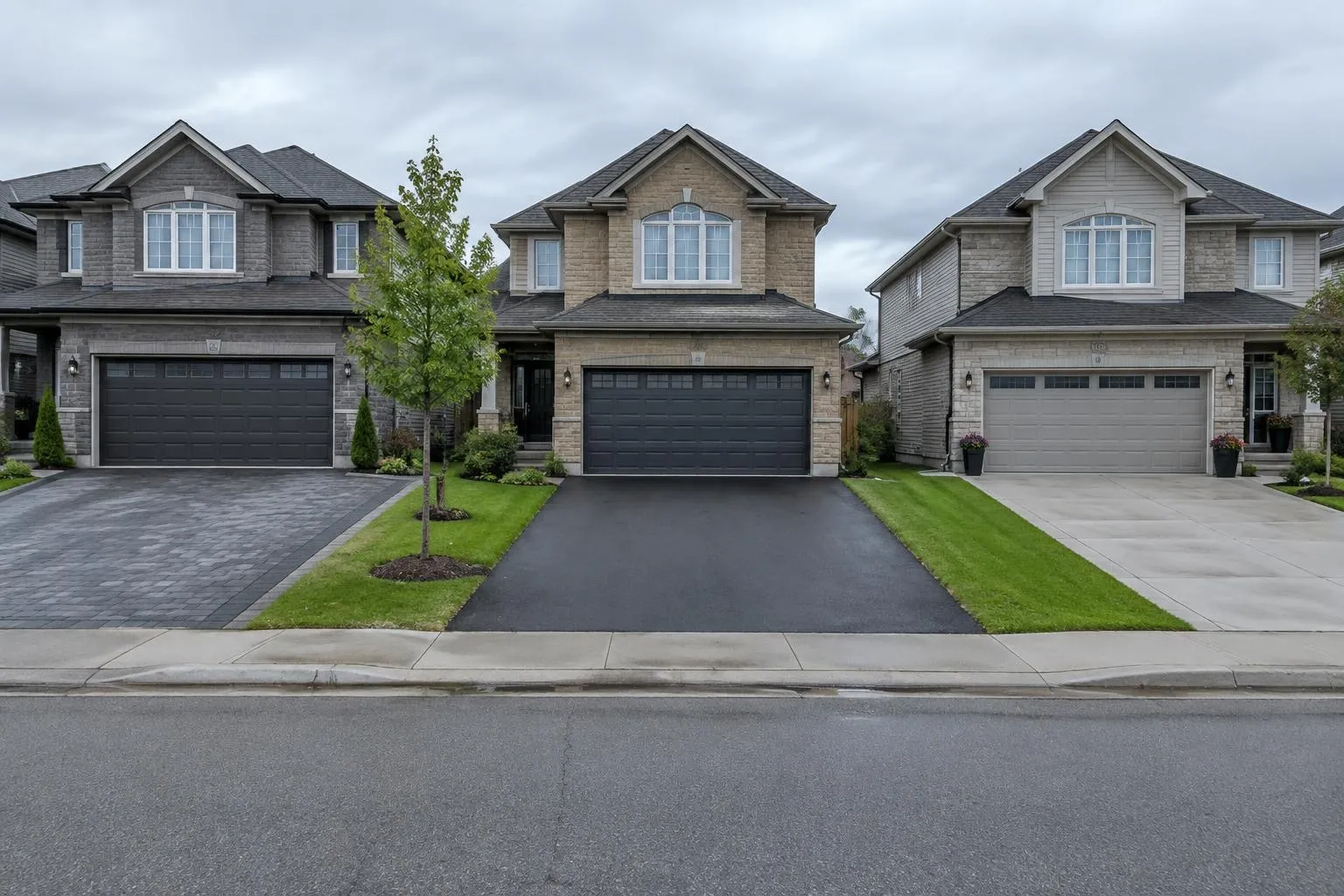
Interlock costs more up front than many surfaces — typical Ontario installed ranges (2026) are $25–$45 per sq ft — but individual pavers can be lifted and relaid, so repairs blend in. Asphalt needs periodic sealing and eventual resurfacing; concrete can crack and patches stay visible. We only install interlock, so we do not quote asphalt or concrete prices.
Key takeaways
- Interlock's biggest practical advantage is repairability: pavers come up and go back down without a patch.
- Asphalt usually costs the least to install but needs sealing and eventual resurfacing; ask an asphalt contractor for current pricing.
- Concrete is smooth and uniform but cracks can appear and repairs rarely match the surrounding slab; ask a concrete contractor for pricing.
- All three perform only as well as the base underneath and the drainage around them.
What is the short answer?
Choose interlock if you want a driveway that can be repaired invisibly, that offers pattern and colour choices, and that you plan to keep for many years. Choose asphalt if the lowest installation cost is the main goal and you are comfortable with regular sealing and eventual resurfacing. Choose concrete if you want a smooth, uniform surface and accept that cracks may appear and patches will show.
We are an interlock contractor, so we are open about that bias. We install interlock and natural stone; we do not install asphalt or poured concrete driveways and we do not quote them. Prices for those surfaces vary by contractor and site, so ask specialists in those surfaces for current numbers rather than relying on a figure from us.
How do the three driveways compare side by side?
The table is a qualitative comparison, based on how each surface is built and maintained. It is not a ranking and it does not include statistics.
| Factor | Interlock | Asphalt | Concrete |
|---|---|---|---|
| Installed price | Typical Ontario installed range (2026): $25–$45 per sq ft | Varies — we don't quote asphalt; ask an asphalt contractor | Varies — we don't quote concrete; ask a concrete contractor |
| Look | Many patterns, colours, borders and textures | Uniform black surface that fades toward grey | Smooth, uniform; stamped or coloured options exist |
| Repairs | Pavers lift out and are relaid; repairs blend in | Patches and crack filling are visible | Cracks and patches are usually visible |
| Routine maintenance | Keep joints full; occasional clean and optional seal | Periodic sealing; eventual resurfacing | Occasional sealing; watch control joints |
| Freeze–thaw | Joints allow slight movement without cracking the surface | Can crack and ravel where water gets underneath | Can crack or scale, especially with de-icing salt |
| Install time | Several days for a typical driveway | Usually quick once the base is ready | Forming, pouring and a curing period |
| Ready to drive on | Generally right after final compaction | After it cools and cures per the installer | After the curing time the installer specifies |
Which looks best?
Looks are a matter of taste, and we say that honestly. In our opinion, interlock gives the most control over how the front of the house reads: a herringbone field with a darker soldier border, a large-format slab near the entrance, or colours pulled from the brick or stone of the home. Asphalt reads clean and simple when it is fresh, then gradually lightens. Concrete offers a crisp modern plane that suits some architecture very well.
Many homeowners find that a driveway is one of the largest visible surfaces on the property, so it shapes curb appeal. We present that as opinion, not a statistic: nobody can promise a specific resale value from any driveway surface.
Which is easiest to repair?
This is where interlock stands apart. Because it is made of individual units over a compacted base, a sunken section can be opened up, the base corrected and the same pavers laid back down. A utility cut, a tree root or a washout from a downspout can be fixed locally, and once the joints are re-sanded the repair is usually hard to spot.
With asphalt, repairs involve cutting out and patching or overlaying, and the patch tends to look different from the older surface around it. Concrete cracks can be sealed, but the line remains, and replacing a section usually leaves a visible colour and texture change. If you want to understand what causes interlock to move in the first place, read our guide to why interlock pavers sink.
What maintenance does each need?
Interlock maintenance is mostly about the joints. Sweep debris off, top up joint sand if it washes out, deal with any weeds early, and consider cleaning and sealing on a schedule that follows the sealer maker's guidance. If an area settles, it can be relevelled.
Asphalt is generally sealed periodically to protect the surface, and after enough years it is resurfaced or replaced. Concrete may be sealed occasionally, and cracks and control joints are watched and sealed as needed. Talk to a specialist in each surface for their recommended schedule.
How do they handle Ontario winters and de-icing?
All three surfaces are used across Ontario, and all three suffer when water gets into a weak or poorly drained base and then freezes. The base and the slope matter more than the surface on top.
Interlock's joints give the surface a little flexibility, so small movements do not usually crack it. For de-icing, follow the paver maker's guidance on which products are suitable, and use plastic-edged shovels or blades to avoid chipping edges. Asphalt can crack and ravel where water gets underneath. Concrete can crack and its surface can scale, and de-icing salt is commonly cited as a factor; ask a concrete specialist which products they recommend.
How long does installation take?
A typical interlock driveway takes several days: removal of the old surface, excavation, base installation in compacted lifts, bedding, laying and cutting pavers, edge restraint, joint sand and final compaction. Weather and site access change the schedule. Once final compaction is done, the surface can generally be used.
Asphalt paving itself is usually quick once the base is ready, but it needs to cool and cure before heavy use. Concrete involves forming, pouring and finishing, then a curing period set by the installer before you drive on it.
Which driveway is right for you?
Answer a few quick questions. The helper weighs your priorities and points you toward the surface that fits them best; it does not use prices for asphalt or concrete because we do not quote them.
How should I think about cost over time?
Up-front price is only one part of the picture. With any surface, think about how often it will need attention, how visible repairs will be and how long you plan to stay. Interlock tends to cost more to install than asphalt, but its maintenance is mostly joint care and occasional relevelling. We avoid putting numbers on asphalt or concrete lifetimes or maintenance costs because they depend heavily on the installer, the base and the site.
If you are replacing an existing driveway, ask whether the work changes the approach at the street. Replacing in place may still bring approval rules into play, and widening almost certainly does. Confirm current requirements with your municipality.
What is it like to live with each surface?
Living with a driveway is mostly about the small jobs that come up every few years. With interlock, those jobs are topping up joint sand, pulling the odd weed, cleaning oil spots and occasionally lifting a small area that has settled. Because the surface is made of separate units, the fix is local and the repaired area blends back in once the joints are refilled.
Asphalt owners tend to think in terms of sealing and eventual resurfacing, and small cracks are usually filled as they appear. Concrete owners mostly watch for cracks and surface scaling; repairs are possible, but a patch rarely matches the surrounding slab. None of these routines is wrong — they are simply different, and it helps to know which one suits the way you use your property.
What should I ask any driveway contractor?
Whatever surface you choose, ask how deep the base will be, how it will be compacted, how water will leave the driveway, who handles the municipal approval if the width or curb cut changes, and what happens to the old material. Ask for these details in writing. A clear written scope makes it much easier to compare quotes fairly, even between different surfaces.
Frequently asked questions
Is interlock more expensive than asphalt?
Interlock usually costs more to install. Typical Ontario installed ranges (2026) for interlock driveways are $25–$45 per sq ft. We don't quote asphalt; ask an asphalt contractor for current prices.
Why don't you give prices for asphalt or concrete?
We only install interlock and natural stone. Asphalt and concrete prices vary by contractor and site, and we would rather not guess at another trade's numbers.
Does interlock crack in winter?
Individual pavers rarely crack under normal use because the joints allow slight movement. Heaving or sinking usually points to a base or drainage problem, which can be corrected.
Can I use salt on an interlock driveway?
Follow the paver maker's de-icing guidance for your product, and use plastic-edged shovels or blades to protect paver edges.
Which driveway adds the most resale value?
In our opinion interlock offers the most curb appeal, but that is opinion, not a statistic. No one can promise a specific resale value from a driveway surface.
Can I put interlock borders on an asphalt driveway?
Paver borders or aprons alongside other surfaces are possible. We assess edge restraint and grades on site so the two materials meet cleanly.
How long before I can drive on new interlock?
Generally right after final compaction and cleanup, unlike poured surfaces that need a curing period.
Related interlock information
From guide to site plan
Get an on-site interlock quote
Call (647) 459-7775 or send the essentials. Your exact price comes from an on-site quote.