Mowing & trimming
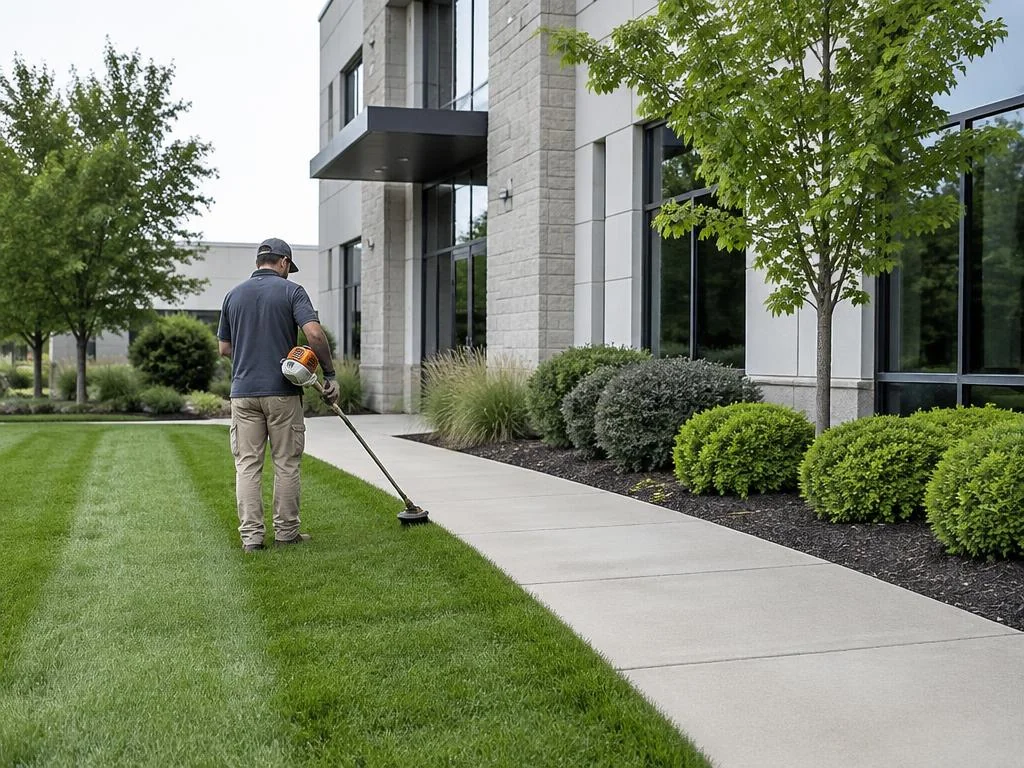
- Regular mowing at a set height (Landscape Ontario recommends 6–8 cm)
- Trimming around signs, posts, trees and fences
- Edging along walks and curbs
- Clippings blown off walks and parking areas
Planting & finishing
Design & Build
One plan for the whole yard, from the first layout to the finished build.
Go to Design & BuildPool Installation
Fibreglass, vinyl liner and concrete pools, with the patio, fence and landscaping around them.
Pool Installation overviewFire Features
Gas fire pits, wood fire pits and outdoor fireplaces, planned around your city's burn rules.
Fire Features overviewWater Features
Ponds, pondless waterfalls and fountains, with the depth, power and winter care planned first.
Water Features overviewRetaining Walls
Armour stone, interlocking block and natural stone walls, built to hold the grade.
Retaining Walls overviewPrepare the site
 AntoineAsphalt.ca
Mowing, beds, pruning, cleanups and turf care for commercial, multi-residential and institutional properties in Hamilton, Burlington and Oakville. You get a written scope, a season plan, and a crew from the company that can also build what your site needs next.
Certificate of insurance and WSIB clearance on requestFour services, priced as one season contract or chosen one by one.
For home lawns and gardens, see Spring cleanup → and Fall cleanup →.
Most grounds contractors inherit a site they know nothing about. When we built it, we already know the plant list, the drainage and the warranty dates. If we didn't, we start with a site walk.
Hardscape, walls and planting to the approved plan.
Site-plan landscaping →Deficiencies closed and the as-planted record handed over.
Close-out details →The first growing seasons: mulch, pruning and replacing plants that fail.
Planting milestones ↓A season contract with a written scope.
What's included ↑New beds, trees, interlock repairs and walls when the budget allows.
Tree planting & upgrades →Typical timing for Southern Ontario. Weather moves every date.
Spring cleanup starts when the snow is gone and the ground firms up: debris, winter grit and litter off lawns and beds.
Bird nesting season starts in late March. Hedges and shrubs are checked for active nests before any shearing.
Cut back perennials and ornamental grasses; edge beds.
First mowing when the grass starts growing.
Early-spring fertilizing, if it's in your spec.
Regular mowing at 6–8 cm.
Mulch top-ups. Prune spring-flowering shrubs right after they finish blooming.
Late-spring fertilizing, if it's in your spec.
Mowing on your contract schedule. Landscape Ontario calls weekly mowing important in peak growth.
Hand-weeding and trimming.
Nesting season: nest checks before hedge work.
Mowing continues on schedule.
Weeding and shaping.
Halton's odd/even watering rule applies to businesses, too.
Mid-August to mid-September is the best window for core aeration, overseeding and the first fall fertilizing (OMAFA).
Nesting season winds down in late August.
Aeration and overseeding window closes in mid-September.
Hedge trimming and shaping for fall.
Raise the mowing height slightly for fall (OMAFA).
Late fall fertilizing once the grass stops growing but is still green, usually mid- to late October.
Leaf cleanup begins.
Final leaf cleanup. Leaves come off before snowfall (OMAFA).
Final cut.
If we also handle your snow, the site is walked and staked before the first storm.
Showcase: always crisp — frequent mowing, tight edges, fresh mulch. Standard: neat and regular. Low-input: safe and tidy, mowed less often.
Rough size: To confirm Entrance & frontage: Showcase Main lawns & beds: Standard Side & rear areas: Low-input Service, loading & storage areas: Low-input Peak-season mowing: Weekly Cleanups: Both Fall cleanup visits: One Mulch: Top-up every year Shrub & hedge pruning: Once a season Turf care: Not selected Nest checks: Yes Start: To confirm Term: One season Billing preference: Not sure Add snow & ice management: No
Ontario bans most pesticides for cosmetic use on lawns, gardens, patios, driveways, parks and schoolyards. Here's what that means for your site.
For appearance, only products on Ontario's Allowable List can be used. The best weed control is thick turf: mowing at 6–8 cm, overseeding, aeration and fall fertilizing crowd weeds out.
Hand-weeding, a mulch layer and dense planting. Bare soil grows weeds.
The ban covers patios and driveways too. Pull or scrape weeds, then fix the cause: open joints. Re-sanding or repairing pavers is a job for our hardscape crews.
Commercial hardscape & interlock →Plants that are poisonous to touch fall under a health-and-safety exception. Treatment is done by a licensed exterminator. We'll flag them when we see them.
Tree pests have their own rules. Have an arborist assess the tree first.
Site-plan landscaping has to survive its first seasons. Missed watering or dead plants can hold up close-out. Enter a few details to see the usual milestones.
October 2026
Spring to fall after acceptance. Watering, mulch, weeding and replacing failed plants matter most now.
Hamilton's standard landscape notes call for at least a one-year contractor warranty from acceptance.
What we can do in this period: mulch, weeding, pruning, and replacement planting quoted through our planting crews →
General planning information. Your site plan agreement and the City's conditions govern. Confirm dates with the City before relying on them.
Thin areas, weeds, compaction, mowing height.
Mulch depth, weeds, edges, plant health.
Form, overgrowth, sightlines at entrances.
Low limbs over walks and parking. City-owned trees are flagged; they need a permit or City crews.
Low spots, washouts and soggy turf.
Heaved or sunken pavers and trip edges.
Overgrowth or debris on paths, ramps and accessible parking.
Where snow will go and what salt will hit.
You get a written scope after the walk.
Based on Landscape Ontario's sample commercial contract. Read any contract for these four things.
A season price, often split into equal monthly payments.
Inclusions and extras written down: what's in the base price and what's quoted separately.
Extra work approved in writing, often with a purchase order number.
A clear termination clause. Landscape Ontario's sample uses 60 days' written notice.
higher office rents with high-quality landscaping, in one US study (Laverne & Winson-Geideman, 2003).
how much more shoppers said they'd pay in tree-lined shopping districts (survey responses, not measured spending).
Most pesticides can't be used for appearance on lawns, gardens, patios, driveways, parks or schoolyards. Only Allowable List products, with exceptions such as poison ivy.
Read the guide →In Hamilton, pruning or injuring a tree on City property needs a permit. That includes a tree with half or more of its trunk on City land. In Burlington, City crews prune public trees.
Burlington: removing a private tree 20 cm or more across needs a permit; light pruning of up to a third of the crown doesn't. Oakville: removals of 15 cm or more need a permit. Hamilton is consolidating its private tree by-laws, so check the current rules.
Federal rules protect active nests. In this region, nesting season runs from late March to late August, so hedges are checked before shearing.
Halton (Burlington, Oakville) uses an odd/even watering rule that applies to businesses; new sod can be watered until it’s established. Hamilton posts its own restrictions.
Ontario's accessibility standards require many organizations to plan maintenance for accessible outdoor elements, such as exterior paths and accessible parking. Our site walks note overgrowth and debris on these routes.
Short summaries for planning. Check them against the current rules, your municipality’s conditions and your design professional.
Whatever the written scope says. Ours covers mowing and trimming, beds, pruning and mulch, spring and fall cleanups, and turf care such as aeration, overseeding and fertilizing. You can take all four or pick what you need.
Yes. We start with a site walk, note what's there and what needs attention, then write the scope.
Not with banned products. Ontario's cosmetic pesticide ban limits weed control to Allowable List products. We rely on healthy turf, hand-weeding and mulch, which also hold up better.
No. Trees on City property need a permit or City crews. We flag low limbs and conflicts so you can contact the City.
Yes. That's where we're strongest: we know the plant list and the warranty dates, and we can quote replacement planting if something fails.
Yes. See commercial snow & ice management for lot plowing, sidewalk crews and salt & ice control.
Hamilton (including Ancaster, Dundas, Stoney Creek and Waterdown), Burlington and Oakville.
Tell us about the property. We'll arrange a site walk and send a written scope with pricing.