
 AntoineAsphalt.ca
Tree Planting & Protection Rules for Hamilton Development Sites
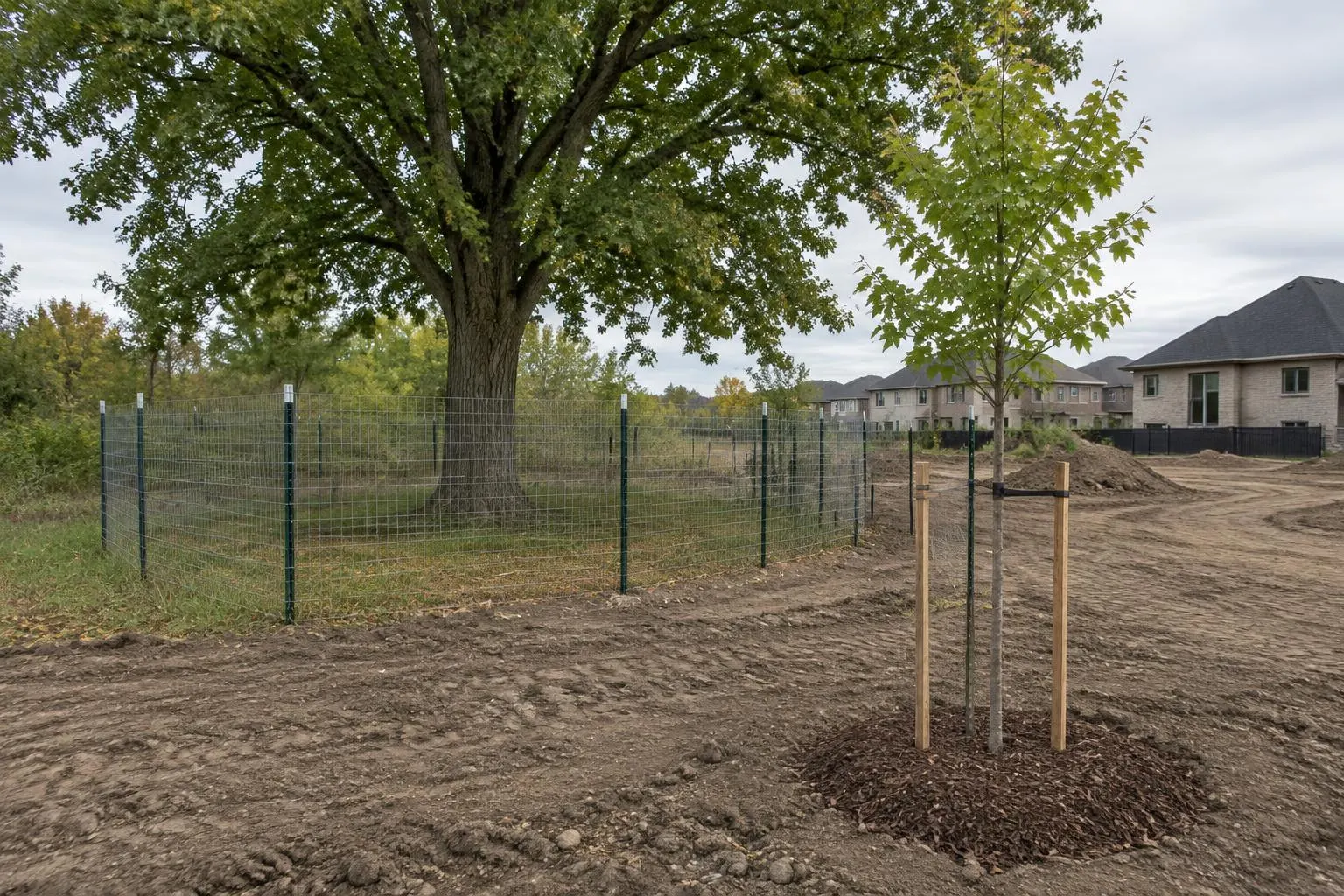
- In Hamilton, City Forestry plants street trees in the City-owned land along a street, including boulevards. once final grade is reached; the developer pays.
- Private trees 10 cm Trunk diameter measured about 1.37 m above the ground. or larger removed for development need 1-for-1 compensation or A payment made instead of doing the work, such as planting a tree..
- Protect existing trees with Sturdy woven wire fencing on posts, used to protect trees. fencing at least 1 m beyond the The ground under the outer edge of a tree's branches..
- On public land, follow the City forestry manual for soil volume, species mix and planting windows (deciduous trees March 1 to November 15).
This page is for general planning only. It is not legal or engineering advice. Check current rules with the regulation, your municipality and your consultants.
Who plants what
In Hamilton, the City's Forestry Section plants street trees in the road allowance once final grade is reached. The developer pays for them. Inside the property line, a landscape contractor can build to the approved plan. That includes compensation trees, buffers, parking islands and other planting.
Compensation trees
Private trees 10 cm DBH or larger removed for development need 1-for-1 compensation, or cash-in-lieu. Compensation trees are shown on the landscape plan and planted as part of the site works.
Tree protection
Existing trees are protected with Paige-wire fencing at least 1 m beyond the dripline. Snow fencing is not accepted. An updated version of the guidelines is under consultation.
Tree and Soil Management Plans
Tree and Soil Management Plans are prepared by a qualified arborist, ISA certified arborist or landscape architect. The contractor installs the protection and planting those plans call for.
Soil volumes
The forestry manual sets minimum soil volumes per tree. Pick a tree type and planting arrangement to see the Hamilton minimum.
Species diversity
Planting on public land limits how much of a planting can be one genus, with the limit tightening as tree counts grow.
Planting windows
For public land, Hamilton's forestry manual sets the deciduous-tree planting window at March 1 to November 15. Spring and fall are the strongest windows for establishment.
Nursery stock standard
Hamilton requires stock meeting the Canadian Nursery Stock Standard for plants on public land. Root ball size scales with Trunk diameter of a nursery tree, measured 15 cm above the soil (up to 100 mm)..
Burlington and Oakville compared
Neighbouring municipalities handle some of these questions differently. Confirm with each municipality.
| Municipality | Private trees | Subdivision street trees |
|---|---|---|
| Hamilton | No city-wide private tree permit by-law yet (harmonized by-law proposed); 1-for-1 compensation for trees 10 cm DBH+ removed for development — as of October 2026, confirm with the City | Planted by City Forestry; developer pays |
| Burlington | Permit for trees 20 cm+ within the Urban Planning Area | Per subdivision agreement and City specifications |
| Oakville | Confirm private-tree requirements with Oakville | In Oakville, north of Dundas Street, developers plant and maintain street trees until the Town assumes the subdivision — we can carry out the planting for builders. |
Frequently asked questions
Who plants street trees in Hamilton?
City Forestry. In Hamilton, the City's Forestry Section plants street trees in the road allowance once final grade is reached. The developer pays for them.
What is 1-for-1 compensation?
A one-for-one replacement. Each private tree 10 cm DBH or larger removed for development is replaced with a compensation tree, or cash-in-lieu is paid.
Can snow fence be used for tree protection?
No. Hamilton calls for Paige-wire fencing at least 1 m beyond the dripline.
When can trees be planted?
March 1 to November 15 for deciduous trees on public land. For public land, Hamilton's forestry manual sets the deciduous-tree planting window at March 1 to November 15.
Related
Request a bid
Send drawings, site details and a tender reference if you have one. Or call (647) 459-7775.